
Best Compression Garment for Tummy Tuck: An Elite Recovery Guide
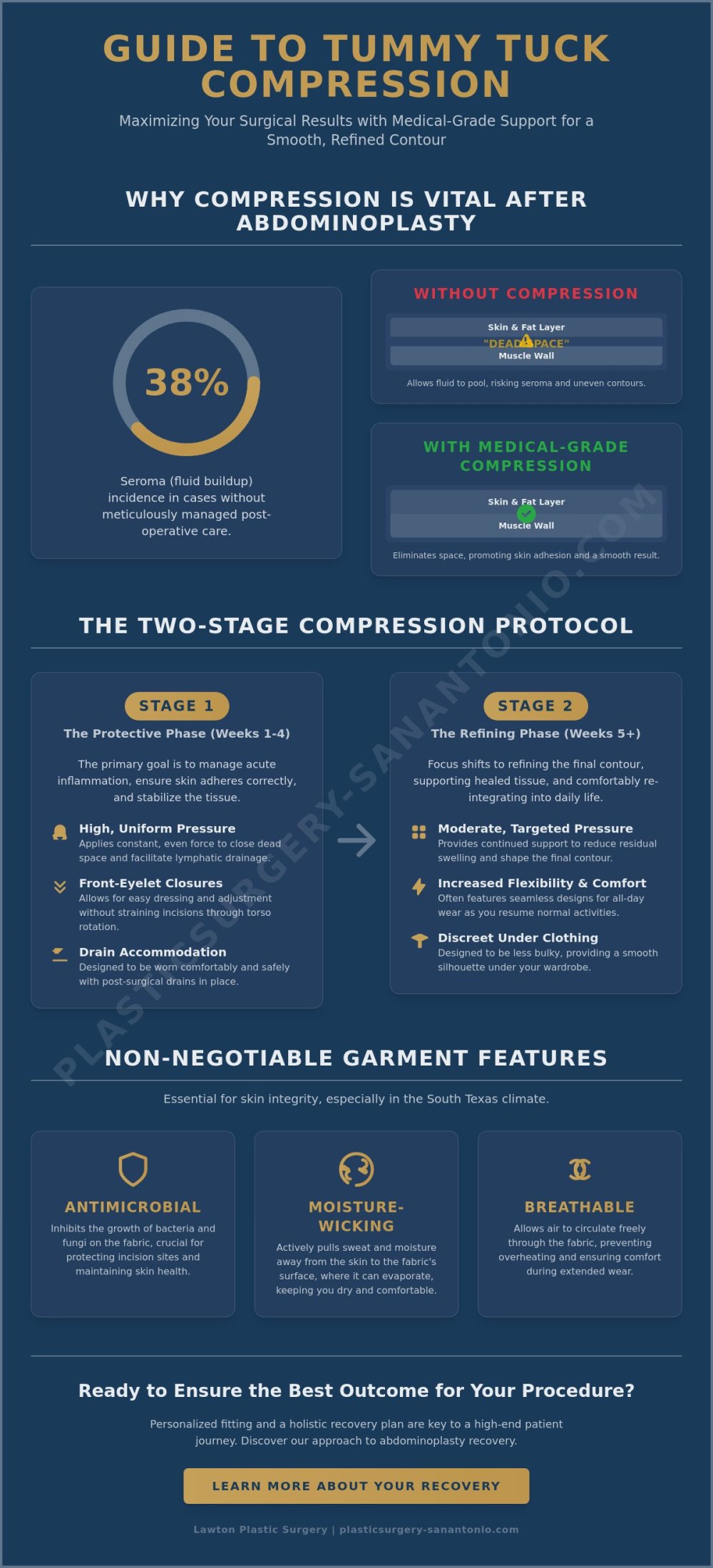
Did you know that seroma incidence, the accumulation of fluid under the skin, occurs in up to 38% of abdominoplasty cases when post-operative care is not meticulously managed? You have invested significant time and emotion into your surgical transformation, so it’s only natural to feel anxious about persistent swelling or the fear that your skin will not properly adhere to its new, sculpted muscle contour. Managing surgical drains while seeking a smooth, flat result can feel like a daunting task, especially when you’re balancing clinical needs with the breathable support required for our unique South Texas climate.
Selecting the best compression garment for tummy tuck recovery is far more than a matter of comfort; it’s a vital clinical decision that ensures your results remain as refined and precise as the surgery itself. We understand that the transition from the operating suite to your daily life requires a protective, expert hand. This guide explores the essential criteria for selecting medical-grade compression, from phased recovery protocols to the latest innovations in smart garment technology, to help you achieve the elite aesthetic outcome you deserve.
Key Takeaways
- Understand the anatomical necessity of medical-grade compression in closing the “dead space” between tissue layers to ensure a smooth, refined abdominal contour.
- Learn how to navigate the two-stage recovery protocol to identify the best compression garment for tummy tuck results that evolve with your specific healing timeline.
- Identify the non-negotiable fabric features, such as antimicrobial and moisture-wicking properties, required to maintain skin integrity in the South Texas climate.
- Discover how personalized fitting and advanced recovery techniques, including lymphatic massage, are integrated into a holistic, high-end patient journey.
The Clinical Necessity: Why Compression is Vital After Abdominoplasty
“Medical-grade compression is a sophisticated tool engineered for a precise clinical purpose — it applies constant, uniform force to close the ‘dead space’ created during an abdominoplasty.”
The distinction between medical-grade garments and standard retail shapewear is a matter of clinical safety rather than simple aesthetics. While high-street shapewear offers a temporary slimming effect, it lacks the graduated, specific pressure required to manage acute surgical trauma. Medical-grade compression is a sophisticated tool engineered for a precise clinical purpose. It applies constant, uniform force to close the “dead space” created during an Abdominoplasty, where the skin and subcutaneous fat are surgically separated from the underlying abdominal musculature.
By effectively eliminating this anatomical void, the garment prevents serous fluid from pooling in the newly created gaps. This is a critical intervention, as research indicates that seroma incidence can range from 1% to as high as 38% depending on the complexity of the procedure and the rigor of post-operative management. Selecting the best compression garment for tummy tuck recovery ensures that this pressure is distributed with surgical-level precision. This consistent support facilitates efficient lymphatic drainage and significantly reduces the deep bruising that typically accompanies extensive body contouring.
To better understand how these garments function during your healing journey, watch this expert overview:
Reducing Post-Operative Edema
Controlled pressure acts as a necessary mechanical barrier against the body’s natural inflammatory response. Edema, the accumulation of fluid within the tissues, can distort the surgical site and obscure the refined contours achieved in the operating room. When medical-grade pressure is applied correctly, it encourages the body to reabsorb interstitial fluid through the lymphatic system more rapidly. This early swelling management is vital. If edema is left unchecked, it can place undue tension on the incision lines, potentially widening scars and compromising the long-term aesthetic outcome.
Skin Adhesion and Contouring
The ultimate success of your procedure depends on the skin’s ability to “shrink” and adhere smoothly to the newly repaired muscle wall. Without the consistent support of the best compression garment for tummy tuck patients, the skin may settle unevenly, leading to ripples or “waves” caused by trapped fluid pockets. Beyond these physical benefits, there is a significant psychological component to compression therapy. Many patients find that the firm, supportive embrace of a high-quality garment provides a sense of security. This feeling of being “held together” often grants the confidence necessary to begin the light mobility essential for a healthy recovery.
Understanding the Two Stages of Post-Surgical Compression
Recovery following an abdominoplasty is not a static event but a dynamic physiological journey that requires a phased approach to support. The healing tissues evolve through distinct biological markers, necessitating a transition in the type and intensity of pressure applied. Using the best compression garment for tummy tuck recovery involves adhering to a two-stage protocol designed to protect the initial repair and subsequently refine the final aesthetic contour. Attempting to bypass these stages or removing support prematurely can trigger “rebound swelling,” a condition where the body’s compromised lymphatic system struggles to manage the sudden change in interstitial pressure, potentially leading to contour irregularities.
Weeks 1–4
High-pressure medical-grade fabric with drain accommodation. Primary objective: manage acute inflammation and ensure skin adheres to the newly tightened abdominal wall.
Weeks 4–8
Lighter, breathable faja or medical bodysuit. Focus shifts from protection to sculpting, with gradual weaning from 24-hour wear to daytime-only support.
Stage 1: The Protective Phase
The first four weeks post-surgery represent the most critical window for tissue stabilization. During this phase, the primary clinical objective is to manage acute inflammation and ensure the skin adheres to the newly tightened abdominal wall. Stage 1 garments are typically characterized by high-pressure medical-grade fabric and specific functional features:
Allow for easy dressing without requiring excessive torso rotation, which could strain fresh incisions.
Provides uniform pressure while safely housing surgical drains during the protective phase.
Supports the “23/7” rule — binder only removed for brief showering — while maintaining hygiene.
While the benefits are clear, clinical literature such as expert commentary on compression and swelling highlights that pressure must be balanced to avoid complications like venous stasis. The garment must be snug enough to eliminate dead space but not so restrictive that it compromises systemic circulation.
Stage 2: The Refinement Phase
As you move into weeks four through eight, the focus shifts from protection to sculpting. Once your surgeon confirms that the initial “dead space” has closed and surgical drains are removed, you will transition to a Stage 2 garment, often referred to as a faja or medical bodysuit. These garments are constructed from lighter, more breathable fabrics that offer high-level contouring without the bulk of Stage 1 binders. This phase emphasizes the refinement of the waistline and provides necessary support to the lower back as you resume more frequent physical activity. Most patients find they can begin a gradual weaning process, moving from 24-hour wear to daytime-only support as the tissues regain their structural integrity. An individualized recovery plan ensures that each patient transitions between these stages with the precision required for a superior aesthetic outcome.
Key Features of the Best Compression Garments
Identifying the best compression garment for tummy tuck recovery requires a sophisticated understanding of textile engineering and its direct interaction with healing dermal layers. A garment’s efficacy is not merely a product of its tightness but is instead defined by how its specific features support the biological demands of the post-operative environment. Professional-grade garments prioritize seamless construction to eliminate the risk of localized pressure points or friction along the primary incision line. These subtle design choices prevent the development of skin ripples or “waves” that can occur when uneven force is applied to tissues during the critical early weeks of adhesion.
Practicality is equally essential for maintaining the “23/7” wear protocol. The inclusion of an open or easy-access crotch design is a non-negotiable requirement for maintaining patient hygiene without the need for frequent garment removal. This ensures that the therapeutic pressure remains constant, preventing the rebound swelling that often follows even brief periods of instability. When searching for the best compression garment for tummy tuck results, these functional details often distinguish an elite recovery experience from one fraught with unnecessary discomfort.
Zipper vs. Hook-and-Eye Closures
The choice of closure mechanism significantly impacts both ease of use and long-term adjustability. Zippers provide a streamlined profile and are often easier for patients to manage independently during the initial stages of limited mobility; however, they must be meticulously lined to prevent pinching the sensitive skin. Hook-and-eye closures offer a superior level of clinical flexibility, as they allow the patient to tighten the garment incrementally as post-operative edema subsides. For those with extensive frontal incisions, side-closure garments are often recommended to avoid any direct mechanical stress on the vertical or horizontal suture lines.
Fabric Technology and Skin Health
Modern medical textiles have evolved beyond simple elastic bands to include advanced materials like Powernet and Comfortweave. Powernet provides the high-level, hexagonal weave rigidity necessary for Stage 1 stabilization, while Comfortweave offers a softer, more breathable alternative that balances compression with extreme skin sensitivity. Medical-grade fabric is defined as a textile specifically engineered to provide consistent 20-30 mmHg pressure across the entire treated area. It’s vital that these materials are latex-free to prevent allergic dermatitis, which can complicate the healing process. Non-negotiable fabric properties include:
Inhibits the growth of bacteria in the warm, moist environment under the garment.
Draws sweat away from the skin, essential for maintaining skin integrity in South Texas.
Ensures fluid is directed toward the lymph nodes rather than being trapped in the extremities.
Practical Recovery: Managing Compression in the San Antonio Climate
“Adhering to the ‘Two-Garment Rule’ is essential — constant pressure is the only way to prevent the fluid fluctuations that can lead to long-term contour irregularities.”
San Antonio’s climate presents a unique set of challenges for patients navigating the post-operative journey. High humidity and soaring South Texas temperatures can make the mandatory 23/7 wear protocol feel particularly taxing. Selecting the best compression garment for tummy tuck recovery in this region requires a strategic focus on thermal regulation and dermal protection. When the body is healing from major surgery, its ability to regulate temperature is already under stress; adding double-layered medical fabrics can lead to excessive perspiration and skin irritation if not managed with clinical precision.
Adhering to the “Two-Garment Rule” is essential for maintaining both hygiene and the integrity of your results. You should always have a primary garment and a secondary backup of the same medical grade. This ensures that while one binder is being laundered, your tissues remain supported without interruption. Constant pressure is the only way to prevent the fluid fluctuations that can lead to long-term contour irregularities. For those recovering in high-heat months, this rotation is non-negotiable for preventing the buildup of bacteria and salt from sweat.
Combating Humidity and Heat
Dermal integrity is often compromised when moisture becomes trapped against the skin for extended periods. To mitigate this, choose light-colored garments that reflect heat and can be easily concealed under breathable summer clothing. Many patients find relief by using specialized silk liners or medical-grade powders in high-friction areas such as the hip bones and under the breasts. These barriers reduce the risk of “garment burn” or heat rashes. Maintaining aggressive hydration also plays a vital role; well-hydrated skin is more resilient against the mechanical friction of a snug binder and recovers more quickly from the localized dryness often caused by medical textiles.
Garment Maintenance and Hygiene
The elastic memory of your garment is what provides the necessary 20-30 mmHg of pressure. To preserve these fibers, you must wash your garments in cold water with a mild, fragrance-free detergent. You should never use a high-heat dryer; extreme heat breaks down the elastane and spandex components, rendering the compression ineffective. Air-drying is the gold standard for maintaining the clinical efficacy of the best compression garment for tummy tuck support. If you notice the fabric beginning to pill or if the garment feels significantly easier to close than it did a week prior, it has likely stretched out and requires immediate replacement to ensure your results remain flat and smooth.
Lower abdominal swelling, often referred to as “FUPA” edema, remains one of the most persistent issues during the first six weeks. This area requires consistent, targeted pressure to ensure the skin adheres perfectly to the underlying muscle. If you are struggling with persistent swelling or have questions about your specific recovery needs, our San Antonio surgical team can help refine your post-operative plan.
Refine your post-operative plan with expert guidance tailored to your recovery.
The Lawton Plastic Surgery Approach to Abdominoplasty Recovery
At Lawton Plastic Surgery, we view the recovery phase as an essential extension of the surgical artistry performed in the operating suite. Achieving a smooth, flat abdominal contour requires more than technical surgical skill; it demands a post-operative strategy that leaves nothing to chance. Dr. Gary Lawton, MD, FACS, ensures that every patient receives a personalized garment fitting that accounts for their specific anatomical proportions and the nuances of their procedure. This level of board-certified oversight is vital for monitoring healing progress and ensuring that the pressure applied is both safe and effective for long-term tissue stabilization.
Our practice serves a discerning patient base from San Antonio, Austin, Boerne, and New Braunfels, providing a sanctuary of clinical excellence. We recognize that the best compression garment for tummy tuck recovery is most effective when it’s integrated into a holistic, high-end journey. This includes the strategic use of advanced recovery techniques, such as manual lymphatic massage, which works in tandem with medical-grade compression to accelerate the removal of interstitial fluid. By combining professional-grade garments with expert clinical care, we help our patients achieve the “Lawton Look”—a result defined by precision, safety, and a sophisticated, natural-looking transformation.
Customized Recovery Protocols
Every recovery plan at our facility is tailored to the individual body type and lifestyle of the patient. Beyond simply selecting the best compression garment for tummy tuck support, Dr. Lawton meticulously monitors the transition between Stage 1 and Stage 2 recovery. Frequent follow-up appointments allow our team to adjust compression levels as swelling subsides, preventing the common pitfalls of over-compression or insufficient support. This steady, methodical approach ensures the skin adheres perfectly to the underlying muscle wall, resulting in an elite aesthetic outcome that remains stable for years to come. We believe that this protective, empathetic oversight is what distinguishes a transactional medical service from a truly transformative patient experience.
Schedule Your Consultation in San Antonio
Preparing for your transformation involves more than just selecting a surgery date; it requires a deep understanding of the healing process. During your private consultation, our elite surgical team will provide a detailed checklist of the recovery supplies you’ll need, including specific recommendations for medical-grade garments. We invite you to ask detailed questions about drain management, fabric technology, and the expected timeline for your specific results. Our goal is to alleviate your anxieties by providing a clear, logical plan for your personal journey.
Secure Your Aesthetic Transformation
The journey toward a sculpted abdominal contour requires a meticulous commitment to post-operative protocols. You now understand that medical-grade compression is not merely a comfort measure but a clinical necessity for closing anatomical dead space and ensuring proper skin adhesion. By adhering to a phased, two-stage recovery and selecting the best compression garment for tummy tuck success, you protect the surgical investment you’ve made in yourself.
Expert oversight remains the most critical component of this process. Dr. Gary Lawton brings over 25 years of surgical excellence to San Antonio, providing the elite care necessary for sophisticated results. As a surgeon Board-Certified by the American Board of Plastic Surgery and frequently voted “Best Plastic Surgeon” in regional rankings, he prioritizes your safety and aesthetic refinement at every step of your holistic healing journey. This level of experienced leadership ensures that every nuance of your recovery is handled with the same precision as the procedure itself.
Your path to a more confident version of yourself begins with a professional consultation.
Frequently Asked Questions
How tight should my tummy tuck compression garment be?
It should feel like a firm, supportive embrace that applies uniform pressure without causing pain or numbness. The garment must be snug enough to eliminate the anatomical dead space between tissue layers, yet it should never restrict your ability to take a full, deep breath or compromise systemic circulation. If you experience tingling in your extremities or notice skin discoloration, the compression is likely too aggressive and requires immediate adjustment by your clinical team.
Can I wear Spanx instead of a medical-grade compression garment?
Retail shapewear is not a suitable substitute for the best compression garment for tummy tuck recovery because it lacks the graduated, medical-grade pressure necessary for surgical stabilization. While standard shapewear provides a slimming silhouette, it isn’t engineered to manage acute post-operative edema or close surgical voids. Medical garments utilize specialized textiles to provide the 20-30 mmHg of consistent force required to prevent fluid accumulation and ensure proper skin adhesion to the muscle wall.
What happens if I stop wearing my compression garment too early?
Prematurely discontinuing compression therapy often triggers rebound swelling, a condition where the body’s compromised lymphatic system becomes overwhelmed by a sudden change in pressure. This can result in the development of seromas or permanent contour irregularities such as ripples and waves in the skin. Consistent wear is essential during the initial six to eight weeks to ensure that the tissues settle smoothly against the newly repaired abdominal muscles for a refined aesthetic outcome.
How do I go to the bathroom while wearing a post-surgical bodysuit?
Professional-grade recovery garments are specifically designed with an open or easy-access crotch to facilitate bathroom use without requiring you to remove the entire bodysuit. This feature is a clinical necessity that allows you to maintain the 23/7 wear protocol during the most sensitive weeks of your healing journey. Keeping the garment in place ensures that therapeutic pressure remains constant, preventing the localized swelling that can occur during even brief periods of garment removal.
Should I buy a smaller size garment to “squeeze” my waist more?
You should never size down in an attempt to force a more dramatic waistline; excessive pressure can lead to skin necrosis or compromised blood flow to the incision site. Sizing for the best compression garment for tummy tuck recovery is based on precise clinical measurements taken by our staff to ensure optimal healing and patient safety. If your garment feels loose as post-operative swelling subsides, we’ll transition you to a smaller Stage 2 garment rather than risk the complications of an ill-fitting binder.
How many weeks do I really need to wear compression after a tummy tuck?
Most patients require approximately six to eight weeks of consistent compression, though the exact timeline depends on your individual rate of lymphatic drainage. The first three to four weeks involve continuous wear, only removing the binder for brief showering. Following this initial phase, Dr. Lawton may transition you to daytime-only wear for an additional month to refine your results and support the tissues as you resume more frequent physical activity and exercise.
Is it normal for the garment to feel more uncomfortable at night?
It’s common for compression to feel more restrictive in the evening because post-operative swelling often peaks after a day of light mobility. To manage this nocturnal discomfort, ensure you’re resting in a slightly flexed position with your head and knees elevated to reduce tension on the abdominal wall. If the discomfort prevents sleep or causes sharp pain, contact our office to verify that the garment is positioned correctly and providing safe, therapeutic levels of pressure.
Disclaimer
Medical & Educational Disclaimer
All content presented on this website, including blog articles, written materials, images, videos, and any associated media, is provided strictly for informational and educational purposes. This content is not intended to serve as medical advice, diagnosis, or treatment, and should not be interpreted as a substitute for consultation with a qualified, licensed healthcare professional.
No doctor–patient relationship is established by your use of this website, engagement with its content, or communication through any digital platform, including contact forms, email, or social media. Medical care is highly individualized, and the information presented here may not apply to your specific condition, anatomy, or circumstances. You should always seek the guidance of a qualified physician regarding any medical concerns, treatments, or decisions.
While every effort is made to ensure accuracy and relevance, medical knowledge evolves rapidly, and no guarantee is made regarding the completeness, reliability, or current applicability of the information provided. The practice and its representatives expressly disclaim any liability for errors, omissions, or outcomes related to the use or misuse of this content.
Surgical & Aesthetic Outcomes Disclaimer
All surgical and non-surgical procedures carry inherent risks. Outcomes vary based on individual factors including anatomy, healing capacity, adherence to post-operative protocols, and overall health status. Any descriptions, discussions, or examples of outcomes presented on this website are illustrative only and should not be interpreted as guarantees of specific results. Before-and-after images, if presented, represent individual cases and do not reflect typical results.
Wellness, Nutrition & Supplementation Disclaimer
Content related to nutrition, supplementation, longevity, metabolic optimization, and integrative or holistic health strategies is provided for educational purposes only. These discussions may include emerging science, theoretical frameworks, or practitioner-based protocols that are not universally accepted within conventional medical standards. Supplements and wellness interventions may interact with medications or underlying health conditions. Consultation with a qualified healthcare provider is strongly recommended prior to initiating any new regimen.
Affiliate & Financial Disclosure
This website may contain links to third-party products, services, or platforms. Some of these links may be affiliate links, meaning a commission may be earned if a purchase is made through them. This comes at no additional cost to you. Product recommendations are based on professional judgment, clinical experience, and research; however, no guarantees are made regarding performance, efficacy, or outcomes. The practice assumes no responsibility for third-party products, services, or claims.
External Links Disclaimer
This website may reference or link to external websites for informational purposes. These sites are not controlled or operated by this practice, and no responsibility is assumed for the accuracy, content, privacy practices, or policies of any third-party website.
Limitation of Liability
By using this website, you acknowledge and agree that you assume full responsibility for any actions taken based on the information provided. Under no circumstances shall the practice, its physicians, affiliates, or representatives be liable for any direct, indirect, incidental, or consequential damages arising from the use of this content.
Consent
By accessing and using this website, you acknowledge that you have read, understood, and agree to this disclaimer in its entirety.