
Breast Implant Removal in San Antonio: A Guide to Explant Surgery
What if the most empowering choice for your long-term health isn’t a new enhancement, but rather a return to your authentic form? Many women eventually reach a stage where their breast implants no longer align with their physical comfort or aesthetic goals. Whether you are managing the persistent tightness of Grade IV capsular contracture or seeking clarity regarding Breast Implant Illness, the decision to undergo implant removal requires a balance of clinical expertise and surgical artistry.
You deserve a solution that prioritizes your safety without compromising your confidence. At Lawton Plastic Surgery, Gary P. Lawton, MD, FACS, leverages his background as a Yale-trained specialist in the top 2% nationwide to guide you through this transition. We promise to provide a comprehensive understanding of the explant process, from medical necessity to the sophisticated techniques that prevent a deflated appearance. This guide details how we combine meticulous surgical precision with personalized care to restore your comfort and achieve a refined, natural-looking silhouette through the Lawton Experience.
Key Takeaways
- Explore the evolving aesthetic landscape in San Antonio and why many patients are choosing to reclaim a more natural silhouette through professional explant surgery.
- Identify the critical clinical symptoms, including advanced capsular contracture and BIA-ALCL risks, that make implant removal a primary medical necessity.
- Compare the long-term benefits of returning to your natural breast profile versus the nuanced considerations involved in a traditional implant replacement.
- Understand the Lawton Experience, where Yale-trained precision and a private, AAAASF-certified environment prioritize your surgical safety and aesthetic refinement.
- Learn how a personalized consultation with a top 2% board-certified surgeon provides the clinical clarity needed for successful and complex revision outcomes.
Understanding Breast Implant Removal (Explant Surgery) in San Antonio
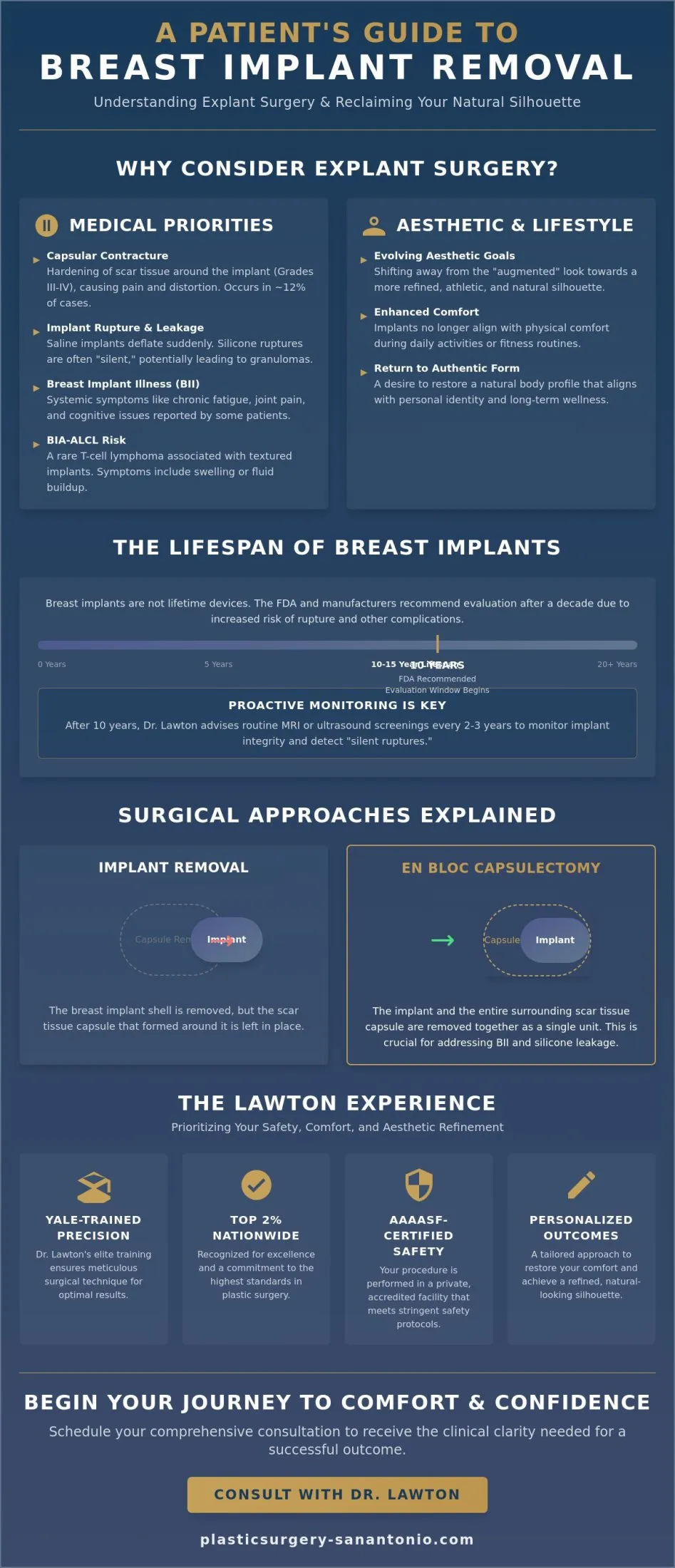
Gary P. Lawton, MD, FACS, provides a refined approach to breast explant surgery, which is the surgical removal of previously placed silicone or saline shells. In San Antonio, a growing number of women are moving away from the “augmented” look that dominated the early 2000s. They’re seeking a more refined, athletic, and natural aesthetic that aligns with a modern lifestyle. While some patients opt for a simple implant removal, others require an en bloc capsulectomy. This advanced technique removes the implant and the surrounding scar tissue capsule as a single, intact unit to ensure no internal debris remains. Explant surgery serves as a restorative procedure that prioritizes both systemic health and physical symmetry.
“The most empowering choice for your long-term health isn’t a new enhancement, but a return to your authentic form.”
Primary Reasons for Choosing Explant Surgery
Patients often seek the expertise of a Yale-trained surgeon to address complications of indwelling breast implants such as Grade III or IV capsular contracture. This condition occurs when the body’s natural scar tissue tightens excessively; it causes persistent pain and visible distortion. Others report symptoms associated with Breast Implant Illness (BII), including chronic fatigue or joint pain, and find relief through total removal. Many San Antonio residents simply find that their aesthetic goals have shifted. They’re trading volume for the comfort of a natural silhouette that better suits their current professional and fitness-oriented lives.
The Lifespan of Breast Implants
It’s a common misconception that these devices last forever. Manufacturers and the FDA generally suggest a 10 to 15 year lifespan for most shells. Over time, the integrity of the silicone or saline wall degrades. This degradation increases the risk of a “silent rupture.” These leaks often go unnoticed without regular imaging because silicone remains contained within the scar capsule. Dr. Lawton, ranked in the top 2% of plastic surgeons nationwide, emphasizes the Lawton Experience by prioritizing long-term safety. This includes routine MRI or ultrasound screenings every two to three years after the initial decade to monitor for implant removal needs or structural failures.
Clinical Indicators: When Removal Becomes a Medical Priority
While many patients seek to update their aesthetic profile, specific clinical developments often make implant removal a medical necessity rather than a cosmetic choice. Gary P. Lawton, MD, FACS, leverages his Yale-trained expertise to identify these critical markers during comprehensive screenings. Recognizing the symptoms of advanced complications early is essential for preserving long-term breast health and systemic wellness. Patients experiencing persistent changes should prioritize a consultation for professional implant removal to prevent further tissue damage.
Capsular Contracture and Tissue Hardening
The body naturally forms a thin layer of scar tissue, or a capsule, around any medical device. This is a standard immune response. However, in approximately 12% of cases, this capsule begins to tighten and contract. Grade III and IV capsular contracture represent the most severe stages, where the breast becomes visibly distorted and feels firm to the touch. This hardening often causes chronic discomfort or sharp, radiating pain. Dr. Lawton addresses this by performing a total capsulectomy, a surgical technique that removes the entire scar envelope to restore tissue softness and eliminate the source of inflammation.
Addressing Rupture and Leakage
Implant integrity isn’t permanent. Saline implants typically exhibit a sudden deflation that’s immediately noticeable. Silicone gel ruptures are more complex because they’re often “silent,” meaning the thick gel remains within the scar capsule without causing an obvious change in shape. Over time, unaddressed silicone leakage can lead to the formation of silicone granulomas or migration into the local lymph nodes. The FDA offers exhaustive data on the Risks and Complications of Breast Implants, emphasizing the importance of regular monitoring. When a rupture is confirmed, the clinical process involves meticulous irrigation and the removal of silicone granulomas to prevent ongoing tissue irritation.
Beyond rupture, we remain vigilant regarding BIA-ALCL, a rare T-cell lymphoma associated with certain textured surfaces. Symptoms like unexplained swelling or late-onset fluid buildup require immediate professional aspiration and pathology. Our practice is ranked in the top 2% nationwide, reflecting our commitment to surgical precision and patient safety. If you’ve noticed changes in the texture or sensation of your breasts, you may benefit from a personalized clinical evaluation at our private San Antonio surgery center.
Explant vs. Replacement: Choosing Your Aesthetic Path
Deciding between a fresh set of implants or returning to a natural silhouette is a deeply personal milestone in a woman’s aesthetic journey. Many patients at Lawton Plastic Surgery find that their priorities shift after a decade or more of living with breast augmentation. Life events like pregnancy and the natural aging process alter skin elasticity, which often makes the original implant size feel heavy or out of proportion with a maturing frame. The psychological transition of returning to a natural breast size requires a clinician who understands both the emotional and physical nuances of this change. Gary P. Lawton, MD, FACS, provides the refined guidance necessary to navigate these choices with calm confidence. It’s common for patients to feel a sense of liberation when choosing implant removal, yet they often worry about the visual “deflation” that occurs once the volume is gone. Explant surgery often requires a lift to maintain a youthful shape.
“Patient satisfaction rates are approximately 30% higher when a lift is performed concurrently.”
The Role of the Breast Lift (Mastopexy)
When an implant is removed, the remaining breast tissue and skin often lack the structural support to maintain a firm, upright position. This phenomenon occurs because the skin has been stretched by the internal volume of the implant for years. To address this, Dr. Lawton utilizes advanced mastopexy techniques designed to reposition the nipple-areolar complex and remove redundant skin. In San Antonio, our practice specializes in minimal-scar mastopexy, which prioritizes surgical finesse and discreet healing. This approach ensures the breast mound is restored to a higher projection on the chest wall, correcting laxity and restoring the “The Lawton Experience” of natural-looking results.
Comparing Outcomes: Explant Only vs. Explant + Lift
Patients who opt for implant removal alone may experience a slightly shorter initial recovery, but they frequently report lower long-term satisfaction if significant sagging is present. Data from clinical reviews suggest that patient satisfaction rates are approximately 30% higher when a lift is performed concurrently to address skin redundancy. While a combination surgery involves a more detailed operative plan, the visual outcome is markedly different. A mastopexy corrects the “bottoming out” effect, whereas a simple explant without a lift may leave the breasts looking hollow or downward-pointing. Recovery from a combined procedure typically involves a 10 to 14-day window before returning to light daily activities, a small investment for a result that reflects your natural vitality and surgical sophistication.
A lift restores the nipple to a more youthful, central position on the breast mound.
Removing excess skin creates a firmer feel and more cohesive shape.
Combined procedures reduce the likelihood of a secondary corrective surgery later.
The Lawton Experience: Surgical Precision and Local Recovery
Choosing a specialist for implant removal requires a delicate balance of artistic vision and technical mastery. Gary P. Lawton, MD, FACS, provides this through a Yale-trained perspective that places him in the top 2% of plastic surgeons nationwide. Our private, AAAASF-certified surgery center in San Antonio offers a level of exclusivity and safety that large, multi-specialty hospitals often lack. Patients benefit from a controlled environment where the focus remains entirely on surgical precision and individual comfort. Dr. Lawton utilizes advanced techniques to minimize tissue trauma, which directly impacts the quality of the final scar and the speed of the healing process.
The Lawton Experience is defined by personalized attention. As a Master Clinician, Dr. Lawton oversees every detail of the surgical plan, from the initial health history review to the final post-operative assessment. This meticulous approach ensures that the physical transition of removing or replacing implants is handled with the same level of care as the original augmentation. We prioritize natural-looking results, often integrating advanced tissue support to maintain breast shape and integrity after the implants are gone.
Your San Antonio Recovery Timeline
The first 48 hours following surgery are critical for managing inflammation and ensuring proper drainage. We provide a detailed protocol for patients returning to homes across Bexar County, focusing on rest and hydration. Most women return to light office work within 7 to 10 days, though strenuous activity requires a full 6-week waiting period. Long-term scar management includes the use of medical-grade silicone sheets and strict sun protection. This is vital because San Antonio averages 220 days of sunshine annually. High UV exposure can darken fresh incisions, so we emphasize protective clothing and medical-grade SPF during the first 12 months of healing.
Safety and Privacy Standards
Board certification by the American Board of Plastic Surgery and FACS credentials are benchmarks of rigorous peer review and ethical standards. In a revision procedure like implant removal, these qualifications ensure the surgeon can handle complex pocket reconstructions or necessary mastopexy requirements. Our private surgical environment protects patient confidentiality while maintaining the same rigorous sterilization standards as a major hospital. Follow-up care is never delegated to mid-level providers. Dr. Lawton personally monitors every stage of the recovery to ensure tissue softening and aesthetic alignment meet his exacting standards.
Ready to prioritize your health and aesthetic goals?
Consult with a Top 2% Board-Certified Surgeon in San Antonio
Gary P. Lawton, MD, FACS, brings a standard of care to San Antonio that is rooted in elite academic training and decades of surgical precision. As a Yale-trained surgeon ranked in the top 2% of plastic surgeons nationwide, Dr. Lawton specializes in the nuanced requirements of revision surgery. Choosing the right professional for your implant removal is a decision that impacts both your immediate safety and your long-term aesthetic satisfaction. Our practice is built on a foundation of clinical excellence, ensuring that every patient benefits from the highest level of medical expertise available in the region.
The Lawton Experience is built on the belief that every patient deserves a personalized pathway to health. We don’t believe in one-size-fits-all solutions; we prioritize your unique anatomy and medical background. By combining advanced medical technology with a refined artistic eye, we ensure your results look natural and feel right for your body. This commitment to clinical excellence has made our practice a destination for those seeking a sophisticated transformation through surgery that respects the body’s natural proportions and long-term wellness.
What to Expect During Your Consultation
Your initial meeting is a methodical exploration of your health goals and surgical needs. We start by reviewing your complete surgical history, including the specifics of your current implant type and any symptoms you’re experiencing. Dr. Lawton performs a thorough physical examination, paying close attention to skin elasticity and the integrity of the surrounding tissue. This clinical assessment is vital for creating a bespoke surgical plan. Whether you’re opting for implant removal alone or a complex replacement with a breast lift, every detail is mapped out to minimize risks and optimize your recovery.
Booking Your Appointment in San Antonio
Our prestigious San Antonio practice offers a private, serene environment where your care is the only priority. We’re located in a high-end medical corridor, providing easy access and discreet entry for our patients. To prepare for your visit to our facility, please consider the following:
- Gather your previous operative reports to maximize the efficiency of your consultation.
- Our expert administrative team provides immediate assistance with scheduling and insurance inquiries.
- Prepare for a comprehensive discussion about your long-term health and aesthetic vision.
Taking the next step is simple. By contacting our office, you gain access to a Master Clinician dedicated to your safety and aesthetic success. We invite you to experience the difference that elite credentials and a patient-centered philosophy can make in your surgical journey. Contact our expert team today to schedule your private consultation and begin your transformation.
Begin Your Journey Toward Renewed Vitality
Choosing to undergo implant removal is a significant step toward prioritizing your long-term health and aesthetic comfort. Whether you’re addressing clinical indicators like capsular contracture or simply seeking a return to your natural silhouette, the path forward requires a blend of surgical mastery and personalized care. Gary P. Lawton, MD, FACS, brings the clinical precision of a Yale-trained surgeon to every procedure, ensuring your transition is handled with the highest level of medical ethics and transparency. As a practitioner ranked in the Top 2% nationwide, Dr. Lawton focuses on delivering results that honor your unique anatomy while maintaining the strictest safety standards.
Your recovery and peace of mind are supported by our private, AAAASF-certified surgery center, where we provide a discreet and sophisticated environment for your transformation. We’ve designed The Lawton Experience to be methodical and supportive, guiding you from the initial health history review to a successful surgical outcome. You don’t have to navigate these medical decisions alone; expert guidance is available to help you achieve a balanced, natural-looking result.
We look forward to helping you feel like yourself again.
Frequently Asked Questions
Is breast implant removal a major surgery?
Breast implant removal is a significant surgical procedure that Gary P. Lawton, MD, FACS, performs under general anesthesia in our AAAASF-certified private surgery center. While the complexity varies based on the presence of scar tissue, the operation typically lasts between 1 and 3 hours. It requires the same level of clinical excellence as the initial augmentation to ensure patient safety and optimal tissue preservation.
Will my breasts look saggy after explant surgery?
The aesthetic outcome depends largely on your skin elasticity and the volume of the implants being removed. Patients who have had implants for 10 years or more often experience skin stretching that prevents a full natural snap-back. To achieve natural-looking results, we frequently recommend a mastopexy to reposition the breast tissue and create a firmer, more youthful contour during the same session.
What is the average recovery time for implant removal in San Antonio?
Most patients return to sedentary office work within 5 to 7 days after their implant removal. You’ll need to refrain from heavy lifting or high-impact exercise for a full 6 weeks to ensure the internal pockets heal without complication. The Lawton Experience includes a structured post-operative protocol designed to manage swelling and support your body through the initial 42-day recovery window.
Does insurance cover breast implant removal for medical reasons?
Insurance providers generally only cover the procedure when it’s deemed medically necessary due to complications like a Baker Grade IV capsular contracture or a confirmed implant rupture. Cosmetic changes or general dissatisfaction aren’t typically covered under standard policies. We provide meticulous documentation of your clinical status to help you seek authorization if your condition meets the specific criteria defined by your insurance carrier.
What is en bloc removal and do I need it?
En bloc removal is a surgical technique where the implant and the surrounding fibrous capsule are removed as one single, unbroken unit. This approach is vital for patients with ruptured silicone implants or those concerned about localized inflammation. Being Yale-trained and among the top 2% of surgeons nationwide, Dr. Lawton utilizes this precise method to prevent any materials from leaking into the chest cavity.
Can I get a breast lift at the same time as my implant removal?
Performing a breast lift simultaneously with your implant removal is a highly effective way to address redundant skin and nipple ptosis. This combined approach reduces your total time under anesthesia and allows for a more sophisticated aesthetic reconstruction. Data indicates that roughly 70% of our explant patients choose a concurrent lift to restore the projection and shape they desire.
How do I know if my breast implant has ruptured?
A saline rupture is immediately obvious because the breast will lose its shape and deflate within 24 to 72 hours. Silicone ruptures are frequently silent and may only be detected through an MRI or a high-resolution ultrasound. The FDA currently recommends that silicone implant patients undergo their first diagnostic screening 5 to 6 years after surgery to check for these asymptomatic leaks.
What are the signs of Breast Implant Illness (BII)?
Patients identifying with BII often report a diverse range of systemic symptoms including persistent fatigue, joint pain, and cognitive “brain fog.” While research is ongoing, many women find these issues improve after a total capsulectomy and removal of the prosthetic. We treat every patient’s concerns with personalized attention, focusing on a thorough review of your health history to determine the best surgical path forward.
About the Author
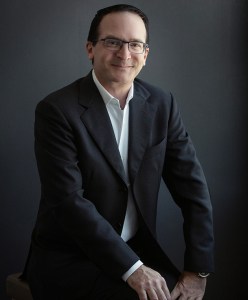
Gary P. Lawton, MD, FACS is a board-certified plastic surgeon in San Antonio, Texas, recognized for his specialization in advanced cosmetic surgery of the breast and body. With more than 25 years of focused clinical experience, he has built a reputation for delivering refined, natural-looking outcomes through surgical precision, scientific rigor, and a personalized approach to care.
Dr. Lawton’s academic foundation reflects a rare combination of engineering discipline and surgical excellence. He graduated summa cum laude with a Bachelor of Science in Chemical Engineering, ranking at the top of his class and earning induction into multiple national honor societies. He went on to earn his medical degree, where he was distinguished as a Senior Scholar in Surgery. He completed a rigorous 10-year surgical training program at Yale University School of Medicine, including residencies in both general surgery and plastic and reconstructive surgery, where he served as Chief Resident.
During this time, he also completed two years of advanced research in gastrointestinal pathobiology and wound healing, earning the American College of Surgeons Scholarship for the Study of Wound Healing and multiple national research awards, including the Corso Award for Outstanding Plastic Surgery Research. Dr. Lawton has authored numerous peer-reviewed publications, abstracts, and book chapters spanning clinical surgery and molecular biology, and has presented his work at regional, national, and international conferences.
Dr. Lawton focuses exclusively on cosmetic procedures of the breast and body, including breast augmentation, implant revision, liposuction, and abdominoplasty. He is a national authority in transaxillary endoscopic dual-plane breast augmentation, a technique designed to optimize precision, minimize visible scarring, and enhance recovery. What distinguishes Dr. Lawton is his integrative, systems-based approach to surgical care.
Disclaimer
Medical & Educational Disclaimer
All content presented on this website, including blog articles, written materials, images, videos, and any associated media, is provided strictly for informational and educational purposes. This content is not intended to serve as medical advice, diagnosis, or treatment, and should not be interpreted as a substitute for consultation with a qualified, licensed healthcare professional.
No doctor–patient relationship is established by your use of this website, engagement with its content, or communication through any digital platform, including contact forms, email, or social media. Medical care is highly individualized, and the information presented here may not apply to your specific condition, anatomy, or circumstances. You should always seek the guidance of a qualified physician regarding any medical concerns, treatments, or decisions.
While every effort is made to ensure accuracy and relevance, medical knowledge evolves rapidly, and no guarantee is made regarding the completeness, reliability, or current applicability of the information provided. The practice and its representatives expressly disclaim any liability for errors, omissions, or outcomes related to the use or misuse of this content.
Surgical & Aesthetic Outcomes Disclaimer
All surgical and non-surgical procedures carry inherent risks. Outcomes vary based on individual factors including anatomy, healing capacity, adherence to post-operative protocols, and overall health status. Any descriptions, discussions, or examples of outcomes presented on this website are illustrative only and should not be interpreted as guarantees of specific results. Before-and-after images, if presented, represent individual cases and do not reflect typical results.
Wellness, Nutrition & Supplementation Disclaimer
Content related to nutrition, supplementation, longevity, metabolic optimization, and integrative or holistic health strategies is provided for educational purposes only. These discussions may include emerging science, theoretical frameworks, or practitioner-based protocols that are not universally accepted within conventional medical standards. Supplements and wellness interventions may interact with medications or underlying health conditions. Consultation with a qualified healthcare provider is strongly recommended prior to initiating any new regimen.
Affiliate & Financial Disclosure
This website may contain links to third-party products, services, or platforms. Some of these links may be affiliate links, meaning a commission may be earned if a purchase is made through them. This comes at no additional cost to you. Product recommendations are based on professional judgment, clinical experience, and research; however, no guarantees are made regarding performance, efficacy, or outcomes. The practice assumes no responsibility for third-party products, services, or claims.
External Links Disclaimer
This website may reference or link to external websites for informational purposes. These sites are not controlled or operated by this practice, and no responsibility is assumed for the accuracy, content, privacy practices, or policies of any third-party website.
Limitation of Liability
By using this website, you acknowledge and agree that you assume full responsibility for any actions taken based on the information provided. Under no circumstances shall the practice, its physicians, affiliates, or representatives be liable for any direct, indirect, incidental, or consequential damages arising from the use of this content.
Consent
By accessing and using this website, you acknowledge that you have read, understood, and agree to this disclaimer in its entirety.