
Eyelid Surgery in San Antonio: The Elite How-To Guide to Blepharoplasty
What if your eyes are telling a story of exhaustion that your spirit doesn’t actually feel? For many individuals in San Antonio, the mirror reveals sagging skin and heavy bags that create a perpetually tired appearance, often leading them to consider eyelid surgery to restore both their field of vision and their confidence. It’s a common frustration to look significantly older than you feel, especially when you worry that a surgical correction might leave you looking artificial or permanently surprised.
You’ve likely spent years considering how to reclaim your natural vibrancy while maintaining the subtle nuances of your expression. Gary P. Lawton, MD, FACS, a Yale-trained plastic surgeon ranked in the top 2% nationwide, utilizes elite surgical techniques to help you achieve a rested, youthful aesthetic. In this guide, you’ll discover the expert steps to refreshing your appearance through the Lawton Experience. We’ll examine the surgical journey from the initial consultation to the final, natural-looking results that define our clinical standard of excellence.
Key Takeaways
- Understand how precision blepharoplasty addresses specific South Texas environmental factors to effectively restore a vibrant, rested appearance.
- Discover why selecting a Yale-trained specialist for your eyelid surgery provides the surgical finesse and safety associated with a practice ranked in the top 2% nationwide.
- Evaluate the longevity of surgical results compared to non-surgical alternatives to determine which path best suits your long-term aesthetic goals.
- Navigate the “Lawton Experience” roadmap, covering everything from the initial facial harmony analysis to achieving a private, painless surgical experience.
- Prepare for a seamless recovery with a detailed clinical timeline and logistical tips to maintain comfort during your first 48 hours in San Antonio.
Understanding Eyelid Surgery in San Antonio: More Than Just Aesthetics
“What if your eyes are telling a story of exhaustion that your spirit doesn’t actually feel?”
Gary P. Lawton, MD, FACS, approaches eyelid surgery as both a meticulous science and a refined art. Technically known as blepharoplasty, this precision procedure involves the surgical removal or repositioning of excess skin, muscle, and fat to restore a youthful contour. For those seeking a comprehensive overview of blepharoplasty, it’s recognized as one of the most effective ways to address the visible signs of periorbital aging. In the San Antonio climate, where residents endure over 220 days of intense UV exposure annually, the delicate tissues around the eyes often degrade faster than in other regions.
To better understand the visual impact of this procedure, watch this helpful video showing real-world results:
Local environmental factors play a significant role in how our eyes age. The combination of chronic sun damage and seasonal allergens, such as the notorious “Cedar Fever” that affects thousands in Central Texas, leads to repetitive rubbing and inflammation. These stressors break down collagen and elastin, forcing many to seek a Master Clinician who understands these regional nuances. Dr. Lawton’s philosophy, rooted in his status in the Top 2% Nationwide, focuses on achieving a refreshed, rested appearance while strictly avoiding the “surprised” or over-tightened look that characterizes less sophisticated techniques.
Why San Antonio Patients Seek Blepharoplasty
Patients from neighborhoods like Alamo Heights and Shavano Park frequently report looking “tired” despite being well-rested. This aesthetic concern often masks a functional necessity. Heavy, sagging upper lids can physically obstruct a driver’s peripheral vision during high-stakes Texas commutes on I-10 or Loop 1604. Beyond safety, the psychological impact is profound. Aligning your outward appearance with your internal energy fosters a sense of renewed confidence that permeates your professional and social life. The Lawton Experience ensures that your eyelid surgery results look natural and feel life-changing.
The Anatomy of an Aging Eye
The skin of the eyelid is the thinnest on the human body, often measuring less than 0.5 millimeters in thickness. Over time, the structural support of the orbital septum weakens; this allows internal fat pads to shift forward and create “bags” or deep hollows. Understanding the clinical distinction between conditions is vital for a successful outcome. Dermatochalasis refers to the presence of loose, redundant skin, whereas ptosis describes a structural drooping of the upper eyelid margin itself due to muscle weakness or tendon stretching. Precision in diagnosis is the hallmark of elite surgical care.
The Procedure Roadmap: How Eyelid Surgery is Performed
Achieving a refreshed, natural appearance requires a surgical philosophy that prioritizes anatomical precision over aggressive alteration. At Lawton Plastic Surgery, Gary P. Lawton, MD, FACS, approaches each eyelid surgery as a bespoke architectural project. This methodical process ensures that results are both aesthetically pleasing and functionally sound, reflecting the standards of a surgeon ranked in the Top 2% Nationwide.
Dr. Lawton performs a comprehensive analysis of 15 distinct facial markers. He evaluates skin elasticity, brow position, and the structural integrity of the orbital rim to ensure facial harmony.
Patients receive care in a private, AAAASF-certified surgery center. Options include intravenous sedation or general anesthesia, administered by board-certified professionals.
Strategic placement within the natural lid creases or along the lash line. These locations ensure that once healed, the entry points remain virtually undetectable.
This phase involves the delicate removal or repositioning of periorbital fat. Dr. Lawton focuses on sculpting the area rather than simply stripping tissue, preventing a “hollowed” look.
Using ultra-fine sutures, the incisions are closed with surgical finesse. This attention to detail is vital for minimizing skin tension and promoting an optimal healing environment.
While the technical execution is rigorous, patient education remains a priority. Transparency regarding safety is essential, and understanding the potential complications of blepharoplasty allows patients to make informed decisions alongside their surgeon. This clinical clarity is a cornerstone of the Lawton Experience.
Upper Blepharoplasty: Lifting the Veil
Upper eyelid surgery specifically targets the “hooded” appearance that often develops with age. Dr. Lawton hides the incision within the natural supra-tarsal fold, roughly 8 to 10 millimeters above the lash line. The technique focuses on removing just enough redundant skin to clear the visual field and brighten the gaze. It’s critical to preserve sufficient skin to allow for natural, effortless eye closure, a balance that requires the steady hand of a master clinician.
Lower Blepharoplasty: Eliminating Under-Eye Bags
For the lower lids, Dr. Lawton frequently employs the transconjunctival approach. By making the incision inside the eyelid, he can address fat pads with zero visible external scarring. If a patient has a deep “tear trough,” fat is repositioned to fill the hollow, creating a smooth transition between the eye and the cheek. When skin laxity is present, a conservative skin tightening technique is used to firm the lower orbital area without distorting the eye shape.
Explore how these techniques can be tailored to your unique anatomy.
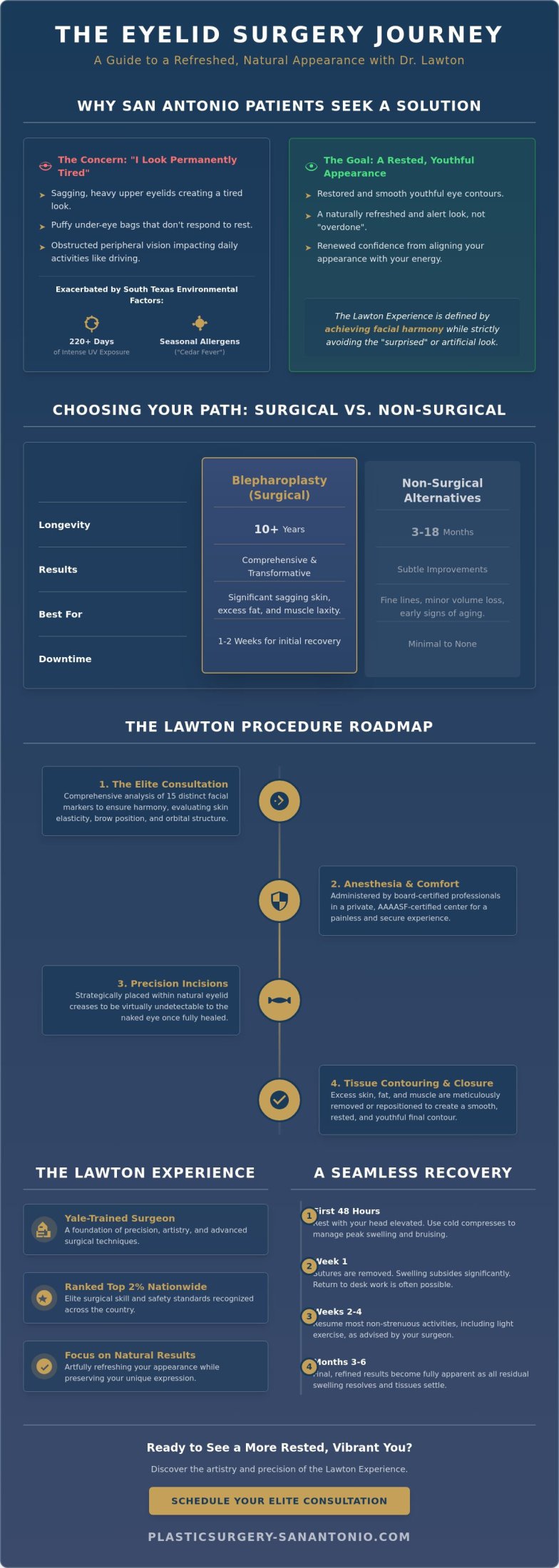
Is Surgery Necessary? Comparing Blepharoplasty to Non-Surgical Options
Many patients visiting our San Antonio practice ask if neuromodulators or dermal fillers can replicate the results of eyelid surgery. While non-surgical “liquid lifts” offer temporary refreshment, they often fail to address the structural changes caused by gravity and time. A surgical blepharoplasty typically provides rejuvenation that lasts 10 to 15 years. In contrast, injectables require maintenance every 4 to 6 months to sustain their effects. This disparity in longevity makes surgery the more cost-effective and definitive investment for long-term facial harmony.
For patients with significant lower lid bags, adding volume with fillers can backfire. Injecting hyaluronic acid into an area already prone to fluid retention often exacerbates puffiness. This creates a heavy, tired appearance rather than a rested one. Gary P. Lawton, MD, FACS, utilizes his elite clinical training to determine if your anatomy requires tissue removal or simple volume replacement. As a surgeon ranked in the top 2% nationwide, Dr. Lawton understands that true periorbital rejuvenation involves more than just filling gaps; it requires the meticulous redistribution of existing tissues.
When Botox and Fillers are the Right Choice
Injectables serve as excellent tools for early intervention or as adjuncts to a surgical plan. Botox is the gold standard for treating dynamic wrinkles, such as the crow’s feet that appear when you smile. Dermal fillers can effectively camouflage mild hollows in the tear trough region for patients in their 20s or 30s who haven’t yet developed significant skin laxity. The Lawton approach focuses on facial rejuvenation and botox to achieve total facial harmonization. This ensures the eyes complement the rest of the face without looking overdone. We often combine these treatments to refine the final surgical outcome, addressing fine lines that surgery alone doesn’t target.
The Limitations of Non-Surgical Rejuvenation
Non-surgical methods cannot physically remove redundant skin. When hooding obscures the natural crease of the upper lid, surgical excision is the only definitive solution. It’s also vital to distinguish between a heavy brow and a heavy lid. A drooping eyebrow may require a brow lift, whereas excess skin on the lid itself demands eyelid surgery. According to Mayo Clinic’s guide to blepharoplasty, the procedure is specifically designed to address these structural issues by removing excess muscle, fat, and skin. Consider these key differences when choosing your path:
Surgery provides a permanent structural change that lasts a decade or more.
Surgery removes heavy, sagging skin that needles cannot fix.
Blepharoplasty corrects “bags” by removing or repositioning fat, rather than just hiding it.
While surgery requires a short downtime, the results are far more transformative than multiple rounds of injectables.
Gary P. Lawton, MD, FACS, brings the precision of a Yale-trained specialist to every consultation, helping you decide if it’s time to move beyond temporary fixes. The Lawton Experience is built on providing honest, medically sound advice that prioritizes your safety and aesthetic goals.
Planning Your Recovery: A Step-by-Step Guide for South Texas Patients
Preparing for your eyelid surgery recovery requires more than just clinical instructions; it involves curating a “recovery nest” that accounts for the specific climate and lifestyle of San Antonio. Gary P. Lawton, MD, FACS, emphasizes that the first 48 hours are foundational for your final aesthetic outcome. Patients should arrange a quiet, darkened space equipped with extra pillows to maintain head elevation. Because the South Texas heat can exacerbate post-operative swelling, ensuring your home environment remains consistently cool is a logistical priority before you arrive for your procedure.
“Most patients feel ‘restaurant ready’ by day 7 to 10 of their recovery journey.”
The clinical timeline follows a predictable, methodical path toward rejuvenation. While initial recovery focuses on the surgical site, the broader transition back to your daily routine in the Pearl District or your professional office in Boerne occurs in stages. Most patients find they can resume sedentary work and light social engagements within 7 to 10 days. However, strenuous activities, including high-intensity workouts at local fitness centers, must be deferred for at least 21 days to prevent blood pressure spikes that could compromise delicate healing tissues.
The First Week: Managing Swelling and Bruising
The “cold compress” protocol is your most effective tool during the initial 48-hour window. Applying chilled compresses in 15-minute intervals constricts blood vessels and limits the extent of bruising. You must sleep with your head elevated at a 30 to 45-degree angle to minimize morning puffiness, a practice that significantly accelerates the resolution of edema. By adhering to these precise steps, most patients feel “restaurant ready” and comfortable appearing in public by day 7 to 10 of their recovery journey.
Long-Term Healing and Scar Care
Gary P. Lawton, MD, FACS, utilizes a distinctive minimal-scar technique that places incisions within the natural folds of the eye, ensuring they remain virtually undetectable once healed. Under San Antonio’s intense sun, protecting these healing incisions from UV rays is mandatory for the first 6 months. UV exposure can cause permanent hyperpigmentation, making scars appear darker than the surrounding skin. We recommend medical-grade silicone gels and the consistent use of polarized sunglasses whenever you’re outdoors.
Ready to begin your transformation with a Yale-trained expert?
The Lawton Experience: Why Dr. Gary Lawton is the Premier Choice
Choosing a surgeon for eyelid surgery is a decision that demands a focus on both clinical safety and artistic vision. Dr. Gary P. Lawton, MD, FACS, brings a standard of excellence rarely found in the regional market. After earning his medical degree from the Yale University School of Medicine, Dr. Lawton has maintained board certification since 1999. This rigorous academic foundation is paired with a prestigious distinction: he’s recognized in the “Top 2% Nationwide” of plastic surgeons. For patients, this isn’t just a title; it’s a metric of surgical precision that minimizes risks while maximizing aesthetic outcomes.
The Lawton Experience centers on a private, AAAASF-certified surgery center located in San Antonio. This accreditation ensures the facility meets the highest national standards for surgical equipment, safety protocols, and professional staffing. By avoiding the public environment of a hospital, patients enjoy a discreet, tranquil setting where their privacy remains the highest priority. Dr. Lawton’s philosophy avoids the “operated-on” look. He focuses on natural-looking results that preserve your unique character, ensuring your eyes look rested rather than artificially tight.
A Legacy of Excellence in San Antonio
For over 24 years, Dr. Lawton has served the South Texas community, drawing patients from New Braunfels to Boerne and beyond. His approach to periorbital procedures is methodical and meticulous. He treats the delicate skin around the eyes with the extreme care it requires, utilizing techniques that prioritize long-term stability and minimal scarring. Local patients frequently report that their results didn’t just change their appearance; it restored their confidence. One patient noted that after her procedure, friends commented on how “refreshed” she looked without ever suspecting she’d had surgery. This track record of success is built on a foundation of over two decades of surgical refinement.
Your Personalized Surgical Plan
No two faces are identical, which is why Dr. Lawton rejects the one-size-fits-all approach. He tailors every procedure to the specific anatomy of the individual’s facial structure and aging pattern. During your private, empathetic consultation, he’ll analyze your skin elasticity, bone structure, and aesthetic goals. This ensures the surgical plan addresses your specific concerns, whether that involves removing redundant skin from the upper lids or repositioning fat deposits for a smoother lower-lid contour. It’s a collaborative process that places your safety and satisfaction at the forefront.
Ready to rediscover your most vibrant self?
Refining Your Vision Through Surgical Excellence
Your path to a refreshed appearance starts with a clear understanding of the procedure and a commitment to clinical precision. Choosing to undergo eyelid surgery is a significant step toward restoring the youthful contours of your face while potentially improving your visual clarity. Success relies on a structured recovery plan and the expertise of a specialist who prioritizes natural results over artificial changes.
Dr. Gary Lawton offers a sophisticated approach that combines his Yale-trained background with the prestige of being in the top 2% of surgeons nationwide. Every procedure is performed in our private, AAAASF-certified surgery center, ensuring you receive the highest standard of safety and discretion available in San Antonio. This meticulous attention to detail defines The Lawton Experience and provides the foundation for your aesthetic transformation.
Experience the Top 2% of Plastic Surgery.
We look forward to helping you achieve a look that’s as vibrant as you feel.
Frequently Asked Questions
How long does eyelid surgery last?
Results from eyelid surgery typically endure for 10 to 15 years, though the natural aging process continues. While an upper blepharoplasty may eventually require a secondary touch-up as skin elasticity changes over a decade, lower eyelid corrections often remain stable for a lifetime. Gary P. Lawton, MD, FACS, utilizes precise techniques to ensure these outcomes remain sophisticated and enduring for every patient.
Will I have visible scars after a blepharoplasty?
Surgical scars are strategically concealed within the natural creases of the upper lid or behind the lower lash line so they remain virtually invisible. Dr. Lawton employs a meticulous minimal-scar approach that prioritizes aesthetic subtlety and patient privacy. Most patients find that their incisions fade into a fine, imperceptible line within 180 days of the procedure, leaving no obvious signs of surgery.
What is the average cost of eyelid surgery in San Antonio?
According to 2022 data from the American Society of Plastic Surgeons, the national average surgeon’s fee for this procedure is $4,120. This figure doesn’t include anesthesia, operating room facilities, or other related expenses. At Lawton Plastic Surgery, we provide a personalized quote during your consultation that reflects our AAAASF-certified facility standards and the elite surgical care provided by our Yale-trained specialist.
Can eyelid surgery improve my vision?
Eyelid surgery can significantly improve your functional vision if redundant skin hangs over the eyelashes and obstructs your superior or peripheral sight. Clinical studies indicate that removing this excess tissue can expand a patient’s visual field by 20% to 30%. This functional benefit often makes the procedure a medical necessity, and our team can help document these visual limitations during your initial clinical evaluation.
How much downtime is required after the procedure?
Most patients return to their professional and social schedules within 7 to 10 days after the procedure. While initial swelling and bruising peak at 48 hours, these symptoms typically resolve enough for public appearances by the second week. We provide a structured recovery protocol that includes specific biologics to accelerate the healing of delicate ocular tissues and ensure a comfortable transition back to daily life.
Is eyelid surgery painful?
Patients generally report minimal discomfort during recovery, frequently describing the sensation as a mild tightness rather than acute pain. We manage post-operative sensitivity with prescribed medication and cold compresses during the first 24 hours. The Lawton Experience prioritizes patient comfort through advanced local anesthesia and precise surgical finesse that minimizes trauma to the surrounding area, ensuring a calm and steady healing process.
What is the difference between a brow lift and eyelid surgery?
Blepharoplasty specifically targets the skin and fat of the lids, whereas a brow lift elevates the entire forehead to reposition sagging eyebrows. If your upper lid heaviness is caused by a descending brow line, a brow lift may be the more appropriate clinical solution. Gary P. Lawton, MD, FACS, assesses these anatomical relationships to determine which refined technique will achieve the most natural-looking results.
At what age should I consider getting a blepharoplasty?
While 90% of patients seeking this procedure are over the age of 35, younger individuals often request it to correct hereditary puffiness or heavy lids. There isn’t a single correct age, as the decision depends on your unique anatomy and aesthetic goals. Our specialist, who is ranked in the top 2% nationwide, evaluates your skin quality and bone structure to ensure the timing of your surgery is optimal.
About the Author
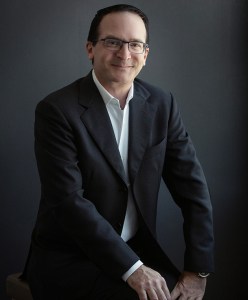
Gary P. Lawton, MD, FACS is a board-certified plastic surgeon in San Antonio, Texas, recognized for his specialization in advanced cosmetic surgery of the breast and body. With more than 25 years of focused clinical experience, he has built a reputation for delivering refined, natural-looking outcomes through surgical precision, scientific rigor, and a personalized approach to care.
Dr. Lawton’s academic foundation reflects a rare combination of engineering discipline and surgical excellence. He graduated summa cum laude with a Bachelor of Science in Chemical Engineering, ranking at the top of his class and earning induction into multiple national honor societies. He went on to earn his medical degree, where he was distinguished as a Senior Scholar in Surgery. He completed a rigorous 10-year surgical training program at Yale University School of Medicine, including residencies in both general surgery and plastic and reconstructive surgery, where he served as Chief Resident.
During this time, he also completed two years of advanced research in gastrointestinal pathobiology and wound healing, earning the American College of Surgeons Scholarship for the Study of Wound Healing and multiple national research awards, including the Corso Award for Outstanding Plastic Surgery Research. Dr. Lawton has authored numerous peer-reviewed publications, abstracts, and book chapters spanning clinical surgery and molecular biology, and has presented his work at regional, national, and international conferences.
Dr. Lawton focuses exclusively on cosmetic procedures of the breast and body, including breast augmentation, implant revision, liposuction, and abdominoplasty. He is a national authority in transaxillary endoscopic dual-plane breast augmentation, a technique designed to optimize precision, minimize visible scarring, and enhance recovery. What distinguishes Dr. Lawton is his integrative, systems-based approach to surgical care.
Disclaimer
Medical & Educational Disclaimer
All content presented on this website, including blog articles, written materials, images, videos, and any associated media, is provided strictly for informational and educational purposes. This content is not intended to serve as medical advice, diagnosis, or treatment, and should not be interpreted as a substitute for consultation with a qualified, licensed healthcare professional.
No doctor–patient relationship is established by your use of this website, engagement with its content, or communication through any digital platform, including contact forms, email, or social media. Medical care is highly individualized, and the information presented here may not apply to your specific condition, anatomy, or circumstances. You should always seek the guidance of a qualified physician regarding any medical concerns, treatments, or decisions.
While every effort is made to ensure accuracy and relevance, medical knowledge evolves rapidly, and no guarantee is made regarding the completeness, reliability, or current applicability of the information provided. The practice and its representatives expressly disclaim any liability for errors, omissions, or outcomes related to the use or misuse of this content.
Surgical & Aesthetic Outcomes Disclaimer
All surgical and non-surgical procedures carry inherent risks. Outcomes vary based on individual factors including anatomy, healing capacity, adherence to post-operative protocols, and overall health status. Any descriptions, discussions, or examples of outcomes presented on this website are illustrative only and should not be interpreted as guarantees of specific results. Before-and-after images, if presented, represent individual cases and do not reflect typical results.
Wellness, Nutrition & Supplementation Disclaimer
Content related to nutrition, supplementation, longevity, metabolic optimization, and integrative or holistic health strategies is provided for educational purposes only. These discussions may include emerging science, theoretical frameworks, or practitioner-based protocols that are not universally accepted within conventional medical standards. Supplements and wellness interventions may interact with medications or underlying health conditions. Consultation with a qualified healthcare provider is strongly recommended prior to initiating any new regimen.
Affiliate & Financial Disclosure
This website may contain links to third-party products, services, or platforms. Some of these links may be affiliate links, meaning a commission may be earned if a purchase is made through them. This comes at no additional cost to you. Product recommendations are based on professional judgment, clinical experience, and research; however, no guarantees are made regarding performance, efficacy, or outcomes. The practice assumes no responsibility for third-party products, services, or claims.
External Links Disclaimer
This website may reference or link to external websites for informational purposes. These sites are not controlled or operated by this practice, and no responsibility is assumed for the accuracy, content, privacy practices, or policies of any third-party website.
Limitation of Liability
By using this website, you acknowledge and agree that you assume full responsibility for any actions taken based on the information provided. Under no circumstances shall the practice, its physicians, affiliates, or representatives be liable for any direct, indirect, incidental, or consequential damages arising from the use of this content.
Consent
By accessing and using this website, you acknowledge that you have read, understood, and agree to this disclaimer in its entirety.