
Questions to Ask at Your Plastic Surgery Consultation: An Elite Patient Guide
Your plastic surgery consultation shouldn’t function as a high-pressure sales presentation; it’s a rigorous technical peer-review of your surgical goals and a surgeon’s clinical depth. While it’s natural to feel a sense of apprehension regarding surgical safety or the risk of an “overdone” aesthetic, the right preparation transforms this meeting into a foundation of absolute trust. By focusing on the specific questions to ask plastic surgeon consultation, you move beyond marketing rhetoric to evaluate the actual scientific precision and artistic finesse behind the scalpel.
We recognize that you’re seeking more than just a procedure; you’re embarking on a holistic, high-end journey led by a meticulous expert. This guide provides a comprehensive list of high-level inquiries designed to vet facility safety standards, such as adherence to the 2026 CMS environmental mandates for operating rooms, and to clarify the nuances of professional board certification. You’ll learn how to identify a practitioner who prioritizes subtle, high-quality outcomes and gain a clear, evidence-based understanding of your recovery timeline and long-term results.
Key Takeaways
- Learn to distinguish between a professional clinical assessment and a high-pressure sales environment to ensure your surgical journey begins with medical ethics and educational clarity.
- Identify the specific credentials, including American Board of Plastic Surgery certification and the FACS designation, that signify the highest tier of surgical training and safety.
- Master the essential questions to ask plastic surgeon consultation regarding specialized techniques for breast and body contouring to understand the anatomical rationale behind your surgical plan.
- Discover how to evaluate a practice’s long-term support infrastructure, moving beyond basic recovery timelines to analyze sophisticated protocols for pain management and post-operative care.
- Recognize the value of localized expertise and a refined aesthetic philosophy when selecting a surgeon dedicated to achieving subtle, high-quality transformations through expert hands.
The Philosophy of the Consultation: Technical Evaluation vs. Sales Pitch
“A surgeon’s willingness to say ‘no’ to certain requests is often the clearest indicator of clinical integrity.”
A consultation is far more than a preliminary appointment; it’s a rigorous clinical exchange that serves as the cornerstone of your surgical journey. It functions as a two-way interview where your personal goals meet the surgeon’s technical expertise. Elite practices deliberately distance themselves from the aggressive marketing tactics often found in high-pressure sales environments, choosing instead to provide a professional medical evaluation. Preparing the right questions to ask plastic surgeon consultation allows you to look past the marketing and focus on the medical facts. This foundational meeting allows for a thorough overview of plastic surgery techniques as they apply specifically to your unique anatomy and physiological needs.
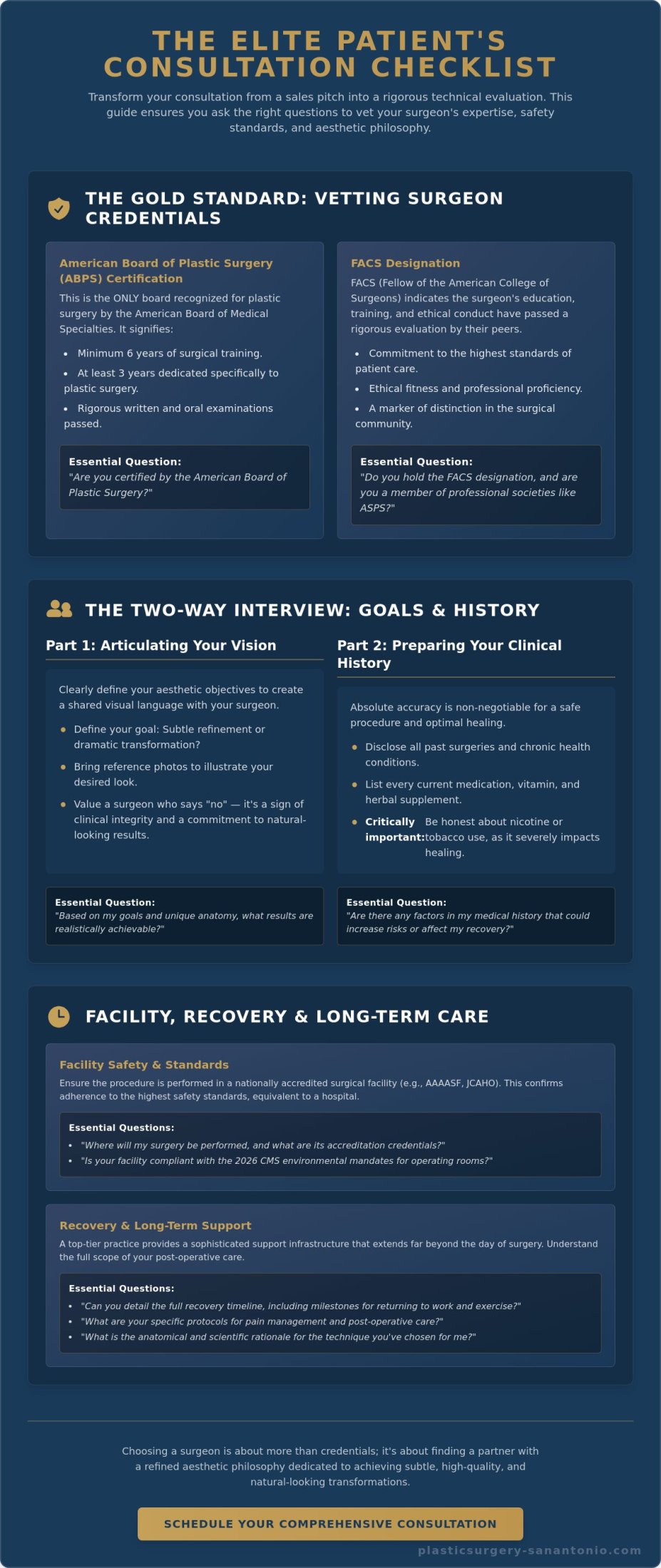
To visualize the depth of this process, consider these essential inquiries for your first meeting:
Dr. Gary Lawton prioritizes educational clarity over transactional interactions. He believes that patients make the most empowered decisions when they fully understand the scientific and anatomical rationale behind a recommended procedure. When considering the primary questions to ask plastic surgeon consultation, you should look for answers that emphasize surgical logic and safety protocols. Transparency regarding your aesthetic goals and comprehensive medical background is essential for a successful outcome. This elite approach ensures the focus remains on your safety and the technical precision of the surgery rather than a simple transaction.
Setting Your Aesthetic Objectives
Articulating your desired outcome is a vital step in the planning process. You must decide if you’re seeking a subtle refinement or a more dramatic transformation to your silhouette or facial features. Use reference photos to establish a shared visual language with your surgeon; these images help bridge the gap between abstract descriptions and concrete surgical expectations. A surgeon’s willingness to say “no” to certain requests is often the clearest indicator of clinical integrity. It demonstrates a profound commitment to your long-term health and the preservation of natural, sophisticated results that won’t appear overdone.
Preparing Your Clinical History
Absolute accuracy in your medical history is non-negotiable for a safe experience. Come prepared to discuss all past surgeries, chronic health conditions, and every current medication or herbal supplement you take. In the context of San Antonio surgical safety, disclosing nicotine or supplement use is vital because these substances directly impact your body’s ability to heal and oxygenate tissues during recovery. These details allow Dr. Lawton to perform a precise risk assessment and develop a tailored post-operative plan. The ideal candidate is an individual with realistic aesthetic expectations and a stable foundation of physical health.
The Gold Standard: Vetting Surgeon Credentials and Facility Safety
Safety is not a simple feature; it is the absolute foundation of your surgical journey. When finalizing your list of questions to ask plastic surgeon consultation, your primary focus must remain on the technical and ethical credentials that define clinical excellence. An elite surgeon does not shy away from these inquiries. They welcome the opportunity to demonstrate their adherence to the highest standards of the American Board of Plastic Surgery and their commitment to patient protection.
The American Board of Plastic Surgery (ABPS) represents the only recognized board for plastic surgery within the American Board of Medical Specialties. This distinction ensures the surgeon has completed at least six years of surgical training, with a minimum of three years specifically dedicated to plastic surgery. Unlike “cosmetic surgery” certifications, which may lack the same depth of reconstructive and anatomical training, ABPS certification guarantees a comprehensive understanding of complex physiological systems. You can verify a practitioner’s standing through the Texas Medical Board to ensure they maintain an active, unencumbered license in San Antonio.
The FACS (Fellow of the American College of Surgeons) designation serves as an additional hallmark of prestige. It indicates that the surgeon’s education, training, professional qualifications, surgical competence, and ethical conduct have passed a rigorous evaluation. If you are considering a complex procedure like a Tummy Tuck or Breast Revision, these credentials provide the peace of mind necessary for a confident decision. Beyond the surgeon, the facility itself must meet stringent criteria. As of 2026, CMS mandates that all Medicare-certified ambulatory surgery centers adhere to strict environmental standards, including specific requirements for temperature (68-75°F) and humidity (20-60%) in operating rooms to mitigate infection risks.
Minimum 6 years of surgical training, with 3+ years dedicated to plastic surgery.
Education, training, qualifications, surgical competence, and ethical conduct evaluated.
Peer-review committee vetting of surgical competence at a local San Antonio hospital.
The ‘Board Certified’ Distinction
True board certification requires a surgeon to pass comprehensive written and oral examinations that test their clinical knowledge and surgical judgment. In Texas, the distinction between a plastic surgeon and a cosmetic surgeon is significant. A plastic surgeon’s training is rooted in both aesthetic and reconstructive principles, allowing them to handle unexpected anatomical variations with scientific precision. Always ask to see the surgeon’s board certificate and confirm their status online before your meeting.
Operating Room Standards and Emergency Protocols
An elite surgical suite must be equipped for advanced monitoring and immediate emergency response. During your consultation, ask whether the anesthesia is provided by a board-certified MD Anesthesiologist or a CRNA. While both are qualified professionals, an MD Anesthesiologist provides an additional layer of medical oversight that many high-risk patients prefer. Finally, verify that your surgeon maintains active hospital privileges at a local San Antonio hospital for the specific procedure you are undergoing. This ensures that a peer-review committee has already vetted their surgical competence, providing a silent foundation of safety even if the surgery is performed in a private, accredited office suite.
Procedure-Specific Inquiries for Breast and Body Contouring
Once you’ve established a surgeon’s foundational credentials, the dialogue must shift toward the technical nuances of your specific procedure. Elite outcomes are never accidental; they’re the result of a meticulous anatomical rationale tailored to your unique physiology. When preparing your list of questions to ask plastic surgeon consultation, focus on the “why” behind the recommended techniques. A sophisticated practitioner should be able to explain how their approach to incision placement or tissue management will yield a result that is both aesthetically refined and medically sound.
Evaluating a surgeon’s specialized expertise involves analyzing their consistency across complex cases. Reviewing “Before and After” galleries is a critical component of this process, but it requires a discerning eye. Look for patients with a similar pre-operative frame to your own and observe the harmony of the final results. High-quality outcomes are characterized by subtle transitions and the absence of tell-tale surgical markers. If the gallery shows a consistent ability to achieve natural-looking contours across varied body types, it’s a strong indicator of both technical finesse and artistic vision.
Questions for Breast Augmentation and Revision
Successful breast surgery depends on a deep understanding of tissue-to-implant dynamics. You should ask: “Which implant profile and placement, such as submuscular versus subglandular, best suits my existing breast tissue and pectoralis anatomy?” For those seeking a Breast Revision, it’s essential to address specific concerns like “bottoming out” or capsular contracture. Inquire about the surgeon’s protocol for internal bra techniques or the use of acellular dermal matrices to reinforce the breast pocket. A precise CC size should be determined through a combination of your aesthetic goals and the physical limitations of your frame to ensure long-term comfort and stability.
Questions for Mommy Makeover and Tummy Tuck
Body contouring procedures, particularly the Tummy Tuck, require a high level of surgical sophistication to address both skin laxity and underlying muscular integrity. During your Mommy Makeover or abdominoplasty consult, ask specifically about the surgeon’s method for diastasis recti repair. Understanding how they re-approximate the abdominal muscles is vital for achieving a firm, functional core. Safety remains paramount when combining procedures; ask how many surgeries can be safely performed in a single session without compromising your recovery. Finally, inquire about tension-management techniques. A meticulous surgeon uses advanced suturing methods to ensure the most refined, low-profile scar possible, allowing you to move forward with absolute confidence in your results.
Managing the Invisible: Risks, Recovery, and Long-Term Care
“The true success of a procedure is determined by the quality of post-operative oversight and the body’s physiological response — not just the immediate aesthetic change.”
Recovery is often the most misunderstood phase of the surgical journey. While many prospective patients focus solely on the immediate aesthetic change, the true success of a procedure is determined by the quality of post-operative oversight and the body’s physiological response. You shouldn’t just ask about the duration of your downtime. Instead, focus on the specific protocols designed to mitigate risks and enhance the healing process. When preparing your list of questions to ask plastic surgeon consultation, prioritize inquiries about the practice’s support system and their methodology for managing the unexpected. This ensures your transformation is a holistic, high-end journey rather than a mere transaction.
A sophisticated surgical plan includes a meticulous approach to pain management and specialized techniques to reduce post-operative swelling. This might involve a combination of non-narcotic medications, lymphatic support, or advanced compression garments tailored to your specific anatomy. You deserve a clear, evidence-based understanding of how your surgeon handles potential complications or aesthetic dissatisfaction. A professional who takes full ownership of the patient journey will provide a transparent policy regarding minor revisions. This long-term relationship ensures that your results are protected by clinical expertise and refined follow-up care for years to come.
The Recovery Roadmap
Specific activity restrictions are vital for protecting your surgical investment. During the first 48 hours, your focus remains entirely on rest, hydration, and tissue stabilization. By the six-week mark, most patients can gradually return to more strenuous exercise, provided their healing has reached specific clinical milestones. If your procedure, such as a Tummy Tuck or Breast Reduction, requires surgical drains, ask how the clinical staff will manage them and what the criteria are for removal. Recovery is a biological process that requires surgical patience and expert oversight.
Complication Management and Dissatisfaction
No surgical procedure is entirely without risk, even in the most expert hands. You should ask: “What is your policy if a minor revision is needed to achieve the goal?” Understanding this policy upfront prevents future confusion and establishes a foundation of clinical trust. Inquire about how the office handles after-hours clinical concerns or emergencies. Essential questions to ask plastic surgeon consultation should always include a review of the practice’s emergency response protocols. You must feel confident that your surgeon is accessible and ready to provide guidance at every stage of your recovery.
If you’re ready to experience this level of dedicated, elite care, schedule your personal consultation in San Antonio today to begin your journey.
The Lawton Difference: Evaluating Aesthetic Refinement in San Antonio
Choosing a surgical partner is a decision that extends beyond credentials alone; it’s an alignment of aesthetic values and personal trust. While your technical questions to ask plastic surgeon consultation establish the clinical foundation, the final phase of your evaluation should focus on the surgeon’s artistic philosophy. Dr. Gary Lawton has spent over 25 years refining his craft in San Antonio, developing a reputation for meticulous precision and a commitment to subtle sophistication. This extensive tenure allows him to navigate the complexities of human anatomy with a level of intuition that only comes from decades of dedicated practice.
The atmosphere of a practice serves as a direct reflection of its clinical priorities. An elite environment should feel personalized, private, and profoundly professional from the moment you arrive. At Lawton Plastic Surgery, we reject the artificial, exaggerated trends that often dominate aggressive marketing, opting instead for high-quality outcomes that enhance your natural beauty. This philosophy ensures that your transformation remains timeless and sophisticated, reflecting a holistic journey rather than a mere transaction.
Assessing the Practice Environment
During your visit, take mental notes on the knowledge and demeanor of the clinical staff. Are they able to discuss the technical aspects of your procedure with clarity and confidence? An elite practice prioritizes patient privacy and provides individualized attention that makes you feel protected and heard. Your Patient Coordinator plays a pivotal role in this surgical journey, serving as your primary advocate and logistical guide. They ensure that every detail, from your initial history review to your final technical plan, is handled with the same level of care and patience that Dr. Lawton brings to the operating room.
Securing Your Consultation
Preparation is the key to a productive first meeting at our San Antonio facility. We recommend bringing a list of your current medications, a detailed history of past surgeries, and any reference photos that help illustrate your aesthetic goals. You can explore our Breast Augmentation San Antonio gallery to begin establishing a shared visual language with Dr. Lawton. When finalizing your list of questions to ask plastic surgeon consultation, pay close attention to how the surgeon’s style aligns with your own vision for refinement.
If you’re seeking a scientist and an artist dedicated to achieving elite results, schedule your elite consultation with Dr. Gary Lawton today.
Embarking on Your Journey Toward Refined Results
Mastering the nuances of your surgical preparation ensures that your path to personal transformation is grounded in scientific precision and artistic vision. By prioritizing technical questions to ask plastic surgeon consultation, you successfully move beyond the surface level of aesthetic desire to engage with the medical realities of safety, recovery, and long-term care. You’ve learned to identify the gold standard of board certification and the importance of selecting a facility that adheres to the most rigorous clinical environmental standards.
Choosing a surgeon who serves as both a scientist and an artist is the most critical decision you’ll make. Gary Lawton, MD, FACS, brings over 25 years of surgical excellence to San Antonio and maintains elite standing as a diplomat of the American Board of Plastic Surgery. His commitment to subtle sophistication ensures that your results appear natural and refreshed rather than artificial or exaggerated. We invite you to experience our individualized care and exclusive facility standards firsthand.
Frequently Asked Questions
How long does a typical plastic surgery consultation last?
A comprehensive consultation typically spans forty-five to sixty minutes. This duration allows for a meticulous review of your medical history, a detailed physical examination, and a thorough discussion of your aesthetic objectives. It’s the ideal time to address your specific questions to ask plastic surgeon consultation to ensure every technical detail is clarified before proceeding with your surgical plan.
Is there a fee for a consultation with Dr. Gary Lawton in San Antonio?
Consultation fees are a standard professional practice that reflects the surgeon’s clinical expertise and the dedicated time required for a personalized assessment. While specific fees vary across the industry, they signify a commitment to a thorough medical evaluation rather than a simple sales transaction. This investment ensures that your surgical journey begins with an expert review of your unique anatomical needs.
Can I see before and after photos of patients with a similar body type to mine?
Reviewing a diverse gallery of before and after photographs is a fundamental part of the clinical evaluation process. We encourage you to examine results from patients with similar pre-operative anatomy to better visualize the potential outcomes for your own frame. This transparency helps establish a shared visual language and ensures your expectations align with the surgeon’s aesthetic philosophy of subtle refinement.
What should I wear to my plastic surgery consultation?
You should wear loose, comfortable clothing that’s easy to remove and put back on. Front-opening shirts or blouses are particularly helpful if you’re discussing procedures like Breast Augmentation or a Breast Lift. Since a physical examination of the treatment area is a necessary component of the clinical assessment, wearing attire that facilitates this process ensures a steady and efficient rhythm during your visit.
Will I meet directly with Dr. Lawton, or a consultant?
You’ll meet directly with Dr. Gary Lawton for the clinical portion of your consultation. Elite surgical care requires a direct relationship between the patient and the surgeon from the very beginning. While our knowledgeable patient coordinators assist with logistical details, the technical evaluation and surgical recommendations are handled exclusively by Dr. Lawton to ensure the highest standards of medical ethics and precision.
How soon after my consultation can I schedule my surgery?
The timeline for scheduling surgery depends on surgical availability and your own personal readiness. Most patients find that they can secure a date within a few weeks to a few months following their initial meeting. This interval provides sufficient time for you to reflect on the questions to ask plastic surgeon consultation and complete any necessary pre-operative health optimizations required for your safety.
Should I bring a friend or family member to my consultation?
Bringing a trusted companion is often beneficial for emotional support and for help in remembering the complex clinical details discussed. A second pair of ears can be invaluable when reviewing recovery protocols or technical procedural steps. We welcome one guest to join you in a supportive capacity, ensuring your journey is shared with someone who understands your goals and can assist during your initial healing phase.
What happens if I’m not a good candidate for the procedure I want?
Dr. Lawton prioritizes your long-term health and safety above all other considerations. If a specific procedure isn’t medically advisable or won’t achieve your desired outcome, he’ll provide an honest assessment and suggest alternative pathways. This may include a different surgical approach or a recommendation to optimize certain health markers before reconsidering the surgery, ensuring your journey remains grounded in clinical excellence.
Disclaimer
Medical & Educational Disclaimer
All content presented on this website, including blog articles, written materials, images, videos, and any associated media, is provided strictly for informational and educational purposes. This content is not intended to serve as medical advice, diagnosis, or treatment, and should not be interpreted as a substitute for consultation with a qualified, licensed healthcare professional.
No doctor–patient relationship is established by your use of this website, engagement with its content, or communication through any digital platform, including contact forms, email, or social media. Medical care is highly individualized, and the information presented here may not apply to your specific condition, anatomy, or circumstances. You should always seek the guidance of a qualified physician regarding any medical concerns, treatments, or decisions.
While every effort is made to ensure accuracy and relevance, medical knowledge evolves rapidly, and no guarantee is made regarding the completeness, reliability, or current applicability of the information provided. The practice and its representatives expressly disclaim any liability for errors, omissions, or outcomes related to the use or misuse of this content.
Surgical & Aesthetic Outcomes Disclaimer
All surgical and non-surgical procedures carry inherent risks. Outcomes vary based on individual factors including anatomy, healing capacity, adherence to post-operative protocols, and overall health status. Any descriptions, discussions, or examples of outcomes presented on this website are illustrative only and should not be interpreted as guarantees of specific results. Before-and-after images, if presented, represent individual cases and do not reflect typical results.
Wellness, Nutrition & Supplementation Disclaimer
Content related to nutrition, supplementation, longevity, metabolic optimization, and integrative or holistic health strategies is provided for educational purposes only. These discussions may include emerging science, theoretical frameworks, or practitioner-based protocols that are not universally accepted within conventional medical standards. Supplements and wellness interventions may interact with medications or underlying health conditions. Consultation with a qualified healthcare provider is strongly recommended prior to initiating any new regimen.
Affiliate & Financial Disclosure
This website may contain links to third-party products, services, or platforms. Some of these links may be affiliate links, meaning a commission may be earned if a purchase is made through them. This comes at no additional cost to you. Product recommendations are based on professional judgment, clinical experience, and research; however, no guarantees are made regarding performance, efficacy, or outcomes. The practice assumes no responsibility for third-party products, services, or claims.
External Links Disclaimer
This website may reference or link to external websites for informational purposes. These sites are not controlled or operated by this practice, and no responsibility is assumed for the accuracy, content, privacy practices, or policies of any third-party website.
Limitation of Liability
By using this website, you acknowledge and agree that you assume full responsibility for any actions taken based on the information provided. Under no circumstances shall the practice, its physicians, affiliates, or representatives be liable for any direct, indirect, incidental, or consequential damages arising from the use of this content.
Consent
By accessing and using this website, you acknowledge that you have read, understood, and agree to this disclaimer in its entirety.