
How to Sleep After a Tummy Tuck: An Elite Guide to Clinical Recovery
Did you know that 50% of a surgical outcome’s success is determined during the recovery phase according to the American Society of Plastic Surgeons? While technical finesse in the operating room creates the foundation for your transformation, the way you rest during the first few weeks is what protects that delicate artistry. You’ve likely felt a mix of excitement and apprehension about your recovery, particularly when it comes to finding a position that doesn’t compromise your results or cause unnecessary back pain. Understanding exactly how to sleep after a tummy tuck is a clinical necessity for tension-free healing; it isn’t just a matter of personal comfort.
We recognize that the fear of rolling over or the difficulty of moving without engaging your core can lead to restless nights. This guide provides the expert methodology needed to master your recovery environment, from utilizing the gold-standard “V-position” to leveraging advanced recovery aids like medical lift recliners or specialized wedge systems. You’ll gain a clear, professional timeline for returning to your preferred sleep habits while ensuring your scar matures with optimal precision. By following these elite protocols, you can trade your post-operative anxiety for the calm confidence of a perfectly managed healing journey.
Key Takeaways
- Learn why the “V-position” is the clinical gold standard for protecting internal sutures and ensuring the skin-to-muscle bond remains undisturbed.
- Discover how to optimize your recovery environment using power recliners or specialized wedge pillow systems to maintain effortless elevation throughout the night.
- Master the step-by-step timeline for how to sleep after a tummy tuck, transitioning safely from the strict elevation of the first week to a comfortable side-sleeping position.
- Implement practical strategies to manage surgical drains and construct “pillow forts” that provide both physical security and psychological peace of mind against rolling over.
- Understand how a commitment to clinical excellence during the recovery phase ensures your aesthetic results are preserved during the most critical healing windows.
The Clinical Necessity of the ‘V-Position’ for Abdominoplasty Recovery
“While a fully extended torso might seem natural, a slightly ‘kinked’ midsection actually promotes superior tissue oxygenation by preventing the constriction of microvascular blood flow during the early stages of cellular repair.”
The surgical success of an Abdominoplasty (tummy tuck) depends heavily on the patient’s adherence to specific postural requirements during the initial healing phase. Maintaining a precise anatomical alignment isn’t merely a suggestion for comfort; it’s a clinical mandate designed to preserve the structural integrity of the internal repairs. When patients ask how to sleep after a tummy tuck, the answer centers on minimizing tension across the abdominal wall to ensure the newly tightened tissues can bond securely to the underlying muscle. Proper positioning facilitates essential lymphatic drainage, which significantly reduces the risk of post-surgical complications like seroma or hematoma formation.
To better understand the biomechanics of this posture and why it’s vital for your recovery, watch this helpful video:
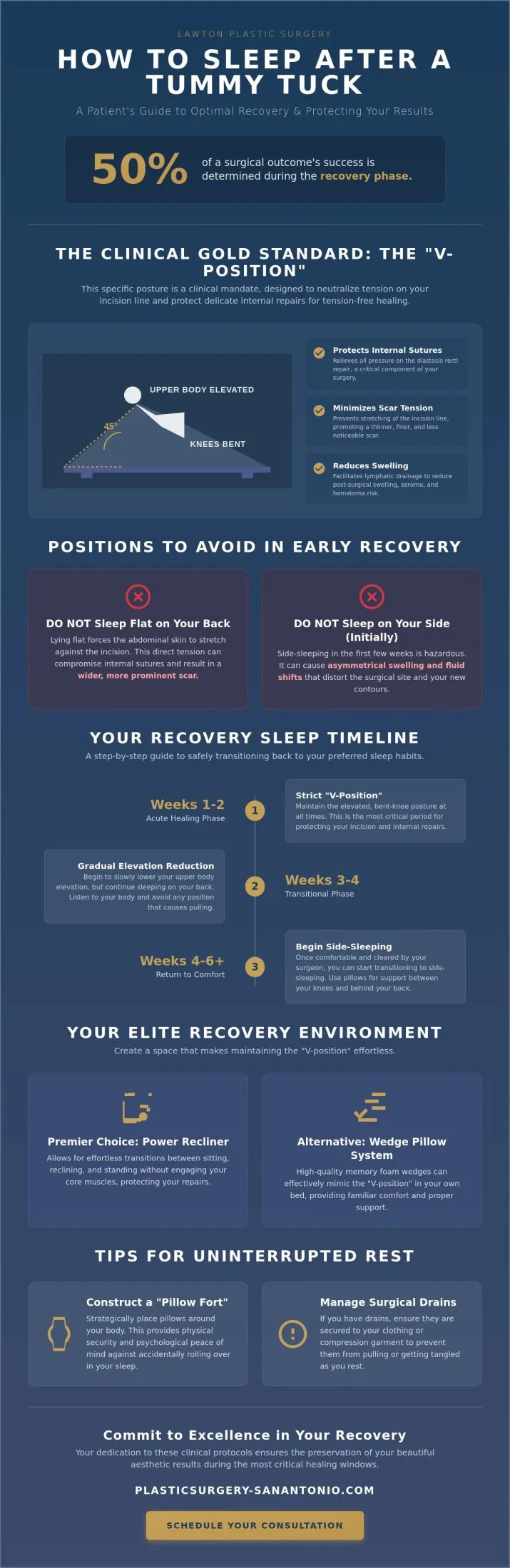
The “V-position” describes a specific configuration where the upper body is elevated at a 45-degree angle while the knees are slightly bent to create a soft “V” shape. This posture effectively neutralizes the pull on the pubic incision line, allowing the skin and fascia to heal without being stretched. By keeping the torso and legs slightly flexed, you prevent the mechanical stress that would otherwise threaten the delicate internal sutures. This methodical approach to rest is the cornerstone of a sophisticated recovery plan, ensuring that the aesthetic refinement achieved in the operating room remains undisturbed.
Understanding Tension-Free Healing
A successful recovery requires protecting the meticulous diastasis recti repair from unnecessary strain. The “V-position” acts as a structural safeguard by shortening the distance between the ribcage and the pelvis, which relieves pressure on the vertical muscle plication. While a fully extended torso might seem natural, a slightly “kinked” midsection actually promotes superior tissue oxygenation by preventing the constriction of microvascular blood flow during the early stages of cellular repair. The “V-position” is the clinical gold standard for post-abdominoplasty rest.
The Risks of Improper Sleeping Positions
Deviating from prescribed positioning can have lasting consequences on your final aesthetic profile. Mastering how to sleep after a tummy tuck is perhaps the most critical skill a patient can develop during the first two weeks of their journey. Prematurely sleeping flat on your back forces the abdominal skin to stretch against the incision, often resulting in a wider, more prominent scar rather than the subtle, thin line we strive to achieve. Side-sleeping within the first 48 hours is particularly hazardous, as it can lead to asymmetrical swelling and fluid shifts that distort the surgical site. Protecting the “tucked” profile during the first 14 days is essential for maintaining the refined contours of the waist.
Creating Your Elite Recovery Environment: Recliners, Wedges, and Support
The environment for your recovery must be as meticulously planned as the surgical procedure itself to ensure the preservation of your aesthetic results. A power recliner stands as the premier choice for most patients because it allows for effortless transitions between sitting and standing without engaging the core musculature. This is a critical factor in maintaining the integrity of the internal repairs and the tension-free environment required for the skin to bond. For those who prefer their existing bedroom setup, high-quality wedge pillow systems can effectively mimic the necessary elevation. These systems, often comprising multiple memory foam components, ensure you remain in the “V-position” while providing the familiarity of your own mattress. Following established tummy tuck recovery guidelines ensures that your home environment supports clinical success from the moment you return from the facility.
In San Antonio, managing the recovery environment also means addressing the local climate. Recovery involves wearing a snug compression garment, which can become uncomfortable in the South Texas heat. We recommend setting your thermostat several degrees lower than usual and utilizing breathable cotton linens to mitigate moisture. Additionally, establishing a “Reach-Zone” on a sturdy bedside table is essential. This zone should house your medications, hydration, and communication devices within arm’s length to prevent any sudden twisting or core engagement that could jeopardize your results. Understanding how to sleep after a tummy tuck involves more than just your posture; it requires a holistic approach to your immediate surroundings.
Recliner vs. Bed: Which is Superior?
Unparalleled stability and a guaranteed incline that prevents accidental rolling during deep sleep.
Best for: The first 7 to 10 days during the acute healing phase.
Allows for better partner proximity, yet requires more manual adjustment to maintain the correct angle.
Best for: Patients who prefer their existing bedroom setup.
While both options can facilitate a safe recovery, the power recliner offers unparalleled stability and a guaranteed incline that prevents accidental rolling during deep sleep. Wedge pillows are a viable alternative that allow for better partner proximity, yet they require more manual adjustment to maintain the correct angle. Dr. Gary Lawton typically suggests utilizing a recliner for at least the first 7 to 10 days to ensure maximum protection during the acute healing phase. If you are planning your tummy tuck in San Antonio, consider arranging for a medical-grade recliner to simplify this transition.
The ‘Elite Recovery Suite’ Checklist
To ensure you understand how to sleep after a tummy tuck without disruption, prepare your suite with these essential items:
Use three or four additional pillows to support your arms and heels, preventing pressure sores.
Silk pajamas allow you to slide in and out of position with minimal friction against sheets.
Use a small bedside fan to mitigate “binder sweat” from the compression garment.
Ensure your binder is snug but breathable before settling in to maintain consistent compression.
The Recovery Sleep Timeline: From Acute Phase to Side-Sleeping
“Any attempt to flatten your posture prematurely can lead to microscopic tears in the tissue bond — consistency during this first week provides the foundation for the more flexible phases of recovery that follow.”
Mastering how to sleep after a tummy tuck is a gradual process that mirrors the biological stages of tissue repair. Your recovery doesn’t follow a static path; instead, it requires a methodical approach that adjusts as your internal sutures stabilize and swelling subsides. This chronological progression is designed to protect the refined contours created during surgery while slowly restoring your natural range of motion. Adhering to these milestones ensures that your aesthetic results mature without the complications of skin laxity or scar widening caused by premature stretching.
First 72 Hours
Constant elevation mandatory; coordinate sleep with pain management for deep restorative rest.
Days 4–7
Maintain V-position without compromise; flattening prematurely risks microscopic tissue tears.
Weeks 2–3
Lower recliner backrest or remove one wedge layer every 3–4 days as tension decreases.
Week 4+
Side-sleeping introduced with the “Pillow Sandwich” technique; flat sleep by week 6+.
Week 1: The Critical Window
The first 72 hours are the most vital for protecting the new abdominal contour. During this acute inflammatory phase, constant elevation is mandatory to manage fluid retention and prevent excessive pressure on the incision line. Following standard post-operative care protocols during this window helps to stabilize the repair and minimize the risk of seroma. It’s essential to coordinate your sleep schedule with your prescribed pain management plan, as staying ahead of discomfort allows for the deep, restorative rest your body needs to initiate the healing process.
From day four through day seven, you must maintain the strict “V-position” without compromise. While you may feel a slight decrease in initial tightness, the internal repairs remain delicate. Any attempt to flatten your posture prematurely can lead to microscopic tears in the tissue bond. Consistency during this first week provides the foundation for the more flexible phases of recovery that follow.
During weeks two and three, you can begin a gradual reduction of the incline as tissue tension naturally decreases. We recommend lowering the backrest of your recliner or removing one thin layer from your wedge system every three to four days. This slow transition allows the abdominal skin to acclimate to increased tension without the shock of a sudden horizontal position. If you experience a “stinging” sensation or a noticeable increase in evening swelling, it’s a signal to return to a higher elevation for another 48 hours.
Safe Transitioning to Side-Sleeping
Week four marks the “Transition Phase” where side-sleeping may be introduced with extreme caution. To do this safely, we utilize the “Pillow Sandwich” technique; place a long body pillow or several firm pillows against your back and another tucked firmly under your abdomen. This configuration supports the abdominal wall from both sides, preventing gravity from pulling on the incision while you rest on your side. It’s a sophisticated way to reclaim comfort without sacrificing surgical precision.
As you learn how to sleep after a tummy tuck in more relaxed positions, always prioritize the feedback from your own body. If you notice increased redness along the scar or a feeling of “pulling” that persists after you wake, you aren’t yet ready for side-sleeping. We strongly advise consulting your San Antonio surgical team before making this switch to ensure your specific repair has reached the necessary strength. By week six and beyond, most patients can safely return to a flat, horizontal position and eventually resume stomach sleeping as the internal scar tissue fully matures.
Overcoming Common Post-Surgical Sleep Disruptions and Anxiety
The transition from a clinical setting to home recovery often introduces a unique set of psychological and logistical challenges. While the physical mechanics of how to sleep after a tummy tuck are paramount, the mental burden of “doing it right” can lead to significant sleep disruptions. Many patients experience a persistent anxiety regarding accidental movement or the displacement of surgical components during the night. Establishing a secure, meticulously organized sleep environment helps to mitigate these fears, allowing your body to focus entirely on the sophisticated process of cellular regeneration and tissue bonding.
A primary concern for many is the instinctive urge to roll over. We recommend constructing a “Pillow Fort” using firm, long bolsters on either side of your torso to create a physical and psychological barrier that prevents side-sleeping. Additionally, the forced incline can sometimes lead to lumbar fatigue or “flat-back” discomfort. Placing a small, rolled-up towel or a dedicated lumbar pillow in the small of your back provides the necessary support to maintain the spine’s natural curvature without compromising the abdominal repair. If restorative rest remains elusive, we encourage you to discuss the use of melatonin or specific prescribed sleep aids during your consultation to ensure your recovery remains on a steady, successful trajectory.
Logistical Mastery: Drains and Binders
Managing surgical drains is perhaps the most overlooked aspect of post-operative rest. It’s essential to ensure that the tubing remains free of kinks while you are in the “V-position” to facilitate uninterrupted fluid removal. Securing the drain bulbs to your compression garment with safety pins or utilizing the “Lanyard Trick” provides security during the night. This technique involves wearing a soft lanyard around your neck to hold the drains, which is particularly beneficial for maintaining safety during essential nighttime bathroom trips. Your compression binder should feel like a firm, supportive hug; if it begins digging into the skin or causing sharp pressure points while you are reclined, it may need a professional adjustment to ensure uniform pressure across the entire surgical site.
Mental Readiness for Rest
Achieving a state of calm confidence is essential for overcoming “surgical insomnia.” Understanding that minor, controlled movements are generally safe and won’t jeopardize your results can alleviate much of the tension that prevents deep sleep. We suggest establishing a methodical pre-sleep routine, perhaps involving light reading or meditative breathing, to signal to your nervous system that it’s time to rest. For immediate peace of mind regarding any nocturnal concerns, our patients have access to the Lawton Patient Portal, ensuring that expert guidance is always within reach.
If you’re ready to begin your transformation with a team that prioritizes every detail of your healing, schedule your tummy tuck consultation with our San Antonio experts today.
Personalized Post-Operative Care at Lawton Plastic Surgery
Success in aesthetic surgery is a partnership between the surgeon’s technical finesse and the patient’s commitment to recovery. At Lawton Plastic Surgery, we believe that the meticulous work performed in the operating room must be mirrored by a high-end, clinical recovery protocol. Dr. Gary Lawton, M.D., FACS, has dedicated his career to refining the surgical experience for San Antonio and South Texas patients, ensuring that every detail, including specific instructions on how to sleep after a tummy tuck, is handled with absolute precision. This holistic approach transforms a standard medical procedure into an exclusive journey toward personal renewal.
Choosing a practice for your transformation means looking beyond the surgery itself to the comprehensive support provided during the most vulnerable healing windows. Our facility prioritizes exclusivity and individualized care, providing a steady, methodical path from your initial history review to your final six-month assessment. San Antonio patients choose our practice because they recognize that subtle, high-quality outcomes are the result of both scientific expertise and artistic vision. This long-term commitment ensures that your recovery isn’t just a phase, but a well-managed transition toward your permanent aesthetic goals.
Expertise You Can Trust
Dr. Lawton’s standing as a board-certified plastic surgeon and his FACS credentials provide a foundation of trust that’s essential for a stress-free recovery. We don’t believe in generic instructions; instead, we provide tailored recovery plans that account for your unique anatomy and the specific nuances of your procedure. Whether it involves a standalone tummy tuck or a comprehensive mommy makeover, your protocol will include a customized sleep and activity schedule designed to optimize scar maturation and minimize tension. By understanding exactly how to sleep after a tummy tuck within our clinical framework, you ensure your results remain protected under the same expert guidance that performed the surgery. This level of meticulous planning is what sets our South Texas practice apart as a leader in body contouring.
Your Next Steps in Transformation
Embarking on this journey begins with an educational consultation where your aesthetic goals meet clinical reality. We invite you to explore our gallery of before-and-after results, which showcases the advanced technical precision and natural-looking refinements Dr. Lawton achieves for his patients. If you’re ready to experience a higher standard of care in a private, sophisticated setting, we’re here to guide you through every step of the process.
Securing Your Aesthetic Future Through Precision Recovery
Adhering to the “V-position” and respecting the clinical timeline for side-sleeping are essential steps in protecting your surgical investment. By optimizing your recovery environment with the right support systems, you ensure the technical finesse of your procedure translates into a flawless, long-term outcome. Mastering how to sleep after a tummy tuck is the final, vital component of your journey. It’s a process that requires patience. Expert protocols safeguard your new contours.
Dr. Gary Lawton brings over 20 years of surgical excellence in San Antonio to every procedure. He is board-certified by the American Board of Plastic Surgery, ensuring your safety and privacy are prioritized. Our practice maintains elite patient satisfaction and safety rankings. We invite you to take the next step toward your personal transformation with confidence.
Frequently Asked Questions
Can I sleep on my side 2 weeks after a tummy tuck?
Most patients should avoid side sleeping until at least four weeks post-operatively to ensure the internal tissues have stabilized. At the two-week mark, the newly established skin-to-muscle bond remains in a critical stage of maturation. Shifting to your side prematurely can exert asymmetrical tension on the incision, potentially leading to increased swelling or scar widening. Always wait for specific clinical clearance from your surgeon before transitioning from the “V-position.”
What happens if I accidentally sleep flat or on my stomach too soon?
Sleeping flat or on your stomach prematurely forces the abdominal skin to stretch against the vertical and horizontal tension of the surgical repair. This mechanical stress can lead to a widened, more visible scar or, in severe cases, compromised internal muscle plication. If an accidental shift occurs, return to the elevated position immediately and monitor for any localized sharp pain or new, significant swelling that might indicate tissue strain.
How long do I have to sleep in a recliner after abdominoplasty?
Clinical guidelines typically recommend maintaining an elevated position in a recliner for a minimum of two to four weeks. This duration ensures that the most acute phase of inflammatory healing has passed and the tension on the incision line has significantly decreased. Mastering how to sleep after a tummy tuck involves this period of disciplined rest to preserve the refined contours achieved during your surgical transformation and to protect the integrity of the repair.
Why does my back hurt so much after sleeping in the V-position?
Lower back discomfort often results from the static, flexed position of the hips, which can cause the lumbar spine to flatten and strain the surrounding ligaments. To alleviate this “flat-back” fatigue, we suggest placing a small, rolled-up towel or a dedicated lumbar support pillow in the natural curve of your lower back. This minor adjustment provides the necessary anatomical support without compromising the essential 45-degree elevation of your torso or increasing abdominal tension.
Is it safe to use a heating pad for back pain while recovering?
We strongly advise against using heating pads on or near the surgical area during your initial recovery phase. Post-operative numbness is common, and you may not be able to accurately perceive the temperature, which creates a significant risk of accidental skin burns. For back pain management, prioritize proper pillow support and consult your surgical team regarding approved topical or oral analgesics that won’t interfere with your physiological healing process or tissue oxygenation.
How do I get out of bed without using my stomach muscles?
The safest method to exit a standard bed is the “log-roll” technique, where you move your entire body as a single unit to the side before using your arms to push upward. However, utilizing a power recliner is the elite standard for effortless transitions, as the mechanical lift performs the work for you. This prevents any sudden engagement of the rectus abdominis muscles, which is vital for protecting the internal diastasis recti repair during the first few weeks.
When can I stop wearing my compression garment at night?
Most patients are required to wear their compression garment 24/7, including during sleep, for the first six weeks following surgery. The garment provides uniform pressure that minimizes dead space, reduces edema, and supports the newly contoured tissues as they bond. Your surgeon will provide a specific timeline for transitioning to daytime-only wear based on your individual rate of lymphatic drainage and how well your tissues have stabilized during the recovery process.
Can sleep deprivation affect my tummy tuck scar healing?
Restorative sleep is a clinical requirement for optimal scar maturation and tissue repair. During deep sleep cycles, the body releases essential growth hormones that accelerate cellular regeneration and collagen synthesis. Chronic sleep deprivation can elevate cortisol levels, which may increase systemic inflammation and potentially delay the healing milestones of your how to sleep after a tummy tuck protocol, ultimately affecting the final aesthetic quality and texture of the surgical scar.
Disclaimer
Medical & Educational Disclaimer
All content presented on this website, including blog articles, written materials, images, videos, and any associated media, is provided strictly for informational and educational purposes. This content is not intended to serve as medical advice, diagnosis, or treatment, and should not be interpreted as a substitute for consultation with a qualified, licensed healthcare professional.
No doctor–patient relationship is established by your use of this website, engagement with its content, or communication through any digital platform, including contact forms, email, or social media. Medical care is highly individualized, and the information presented here may not apply to your specific condition, anatomy, or circumstances. You should always seek the guidance of a qualified physician regarding any medical concerns, treatments, or decisions.
While every effort is made to ensure accuracy and relevance, medical knowledge evolves rapidly, and no guarantee is made regarding the completeness, reliability, or current applicability of the information provided. The practice and its representatives expressly disclaim any liability for errors, omissions, or outcomes related to the use or misuse of this content.
Surgical & Aesthetic Outcomes Disclaimer
All surgical and non-surgical procedures carry inherent risks. Outcomes vary based on individual factors including anatomy, healing capacity, adherence to post-operative protocols, and overall health status. Any descriptions, discussions, or examples of outcomes presented on this website are illustrative only and should not be interpreted as guarantees of specific results. Before-and-after images, if presented, represent individual cases and do not reflect typical results.
Wellness, Nutrition & Supplementation Disclaimer
Content related to nutrition, supplementation, longevity, metabolic optimization, and integrative or holistic health strategies is provided for educational purposes only. These discussions may include emerging science, theoretical frameworks, or practitioner-based protocols that are not universally accepted within conventional medical standards. Supplements and wellness interventions may interact with medications or underlying health conditions. Consultation with a qualified healthcare provider is strongly recommended prior to initiating any new regimen.
Affiliate & Financial Disclosure
This website may contain links to third-party products, services, or platforms. Some of these links may be affiliate links, meaning a commission may be earned if a purchase is made through them. This comes at no additional cost to you. Product recommendations are based on professional judgment, clinical experience, and research; however, no guarantees are made regarding performance, efficacy, or outcomes. The practice assumes no responsibility for third-party products, services, or claims.
External Links Disclaimer
This website may reference or link to external websites for informational purposes. These sites are not controlled or operated by this practice, and no responsibility is assumed for the accuracy, content, privacy practices, or policies of any third-party website.
Limitation of Liability
By using this website, you acknowledge and agree that you assume full responsibility for any actions taken based on the information provided. Under no circumstances shall the practice, its physicians, affiliates, or representatives be liable for any direct, indirect, incidental, or consequential damages arising from the use of this content.
Consent
By accessing and using this website, you acknowledge that you have read, understood, and agree to this disclaimer in its entirety.