
Managing Pain After a Breast Lift: An Elite Guide to a Comfortable Recovery
True surgical excellence is measured not just by the aesthetic silhouette achieved on the operating table, but by the quiet sophistication of the recovery that follows. While many patients feel a natural apprehension regarding post-operative discomfort, the science of managing pain after a breast lift has evolved into a precise clinical discipline. We recognize that fears of intense pain or the systemic side effects of narcotics, such as nausea and constipation, can create significant anxiety. You’ve likely wondered if the physical toll of surgery might overshadow the beauty of the results, yet modern techniques prioritize your comfort as much as your contours.
This guide details the advanced clinical protocols and personalized recovery strategies utilized by San Antonio’s elite plastic surgery experts to ensure your journey is both seamless and restorative. You’ll receive a comprehensive overview of the recovery timeline alongside expert-approved methods for minimizing swelling and localized discomfort. By understanding our specific philosophy of preemptive pain management, you can approach your transformation with absolute confidence. We’ll outline how meticulous surgical technique and sophisticated aftercare combine to redefine the standard of patient comfort.
Key Takeaways
- Understand how multimodal analgesia and advanced local anesthetics are used to preemptively address discomfort at the neural level.
- Discover why specific sleep positioning and surgical compression are essential for managing pain after a breast lift and accelerating the reduction of swelling.
- Learn to distinguish between normal post-operative sensations like tightness and the signs of a healthy, progressing inflammatory response.
- Explore a phased six-week recovery timeline that outlines the transition from meticulous rest to the safe resumption of your daily lifestyle.
- See how elite surgical precision and decades of clinical expertise minimize tissue trauma to facilitate a more comfortable and transformative patient journey.
Understanding Post-Operative Sensations: What to Expect After a Breast Lift
“Most patients describe the early post-operative days as a feeling of heaviness or intense muscle tightness rather than a sharp or distressing sensation.”
Achieving a refined aesthetic result requires a deep understanding of the physiological transition your body undergoes during the healing phase. For most patients, the initial step in managing pain after a breast lift involves recalibrating expectations about what “normal” sensations feel like. A Mastopexy (breast lift) involves the surgical repositioning of glandular tissue and the removal of excess skin to restore a youthful, elevated contour. This anatomical restructuring naturally leads to a period of tightness and localized soreness as the internal structures settle into their new positions.
Sensory changes are a common part of the clinical process. You might experience temporary skin sensitivity or a “pins and needles” sensation as the cutaneous nerves recover from the surgical intervention. While a standard lift focuses on tissue and skin, a lift combined with breast augmentation introduces a different dynamic; the presence of an implant adds a feeling of internal pressure or “fullness” that usually dissipates within the first few weeks as the muscles accommodate the new volume.
To better understand the nuances of the recovery process, watch this helpful video regarding post-operative care:
The Difference Between Discomfort and Pain
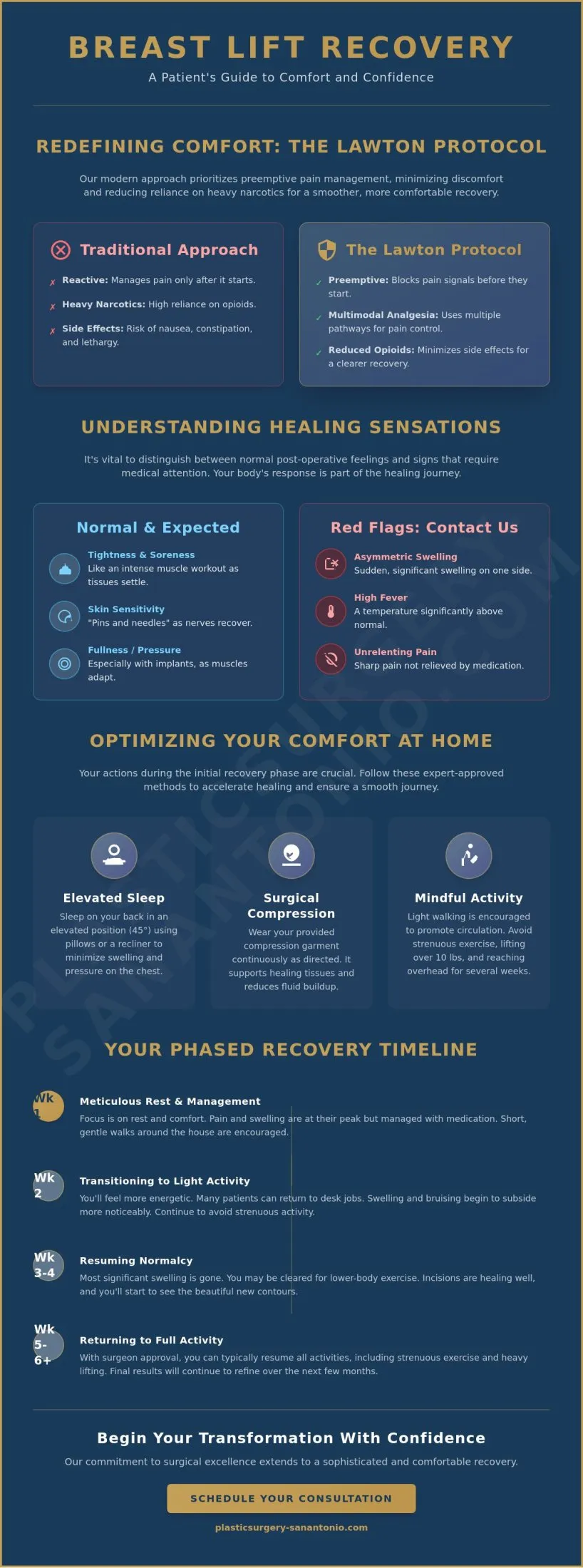
It’s essential to distinguish between the expected inflammatory response and acute pain. Most patients describe the early post-operative days as a feeling of heaviness or intense muscle tightness rather than a sharp or distressing sensation. We define post-mastopexy discomfort as a manageable inflammatory response that responds well to specialized clinical protocols. However, “red flag” symptoms such as sudden, asymmetric swelling, a high fever, or sharp pain that doesn’t improve with medication require immediate communication with your surgical team. Understanding these distinctions ensures you remain calm and focused on your healing journey.
Factors Influencing Your Individual Recovery Experience
Your specific surgical plan significantly dictates your early recovery experience and your approach to managing pain after a breast lift. A periareolar incision typically involves less tissue disruption than a full anchor mastopexy, which might influence the degree of initial swelling you encounter. Your individual pain threshold and history with previous surgeries also play a role in how your brain processes these signals. Following “clean living” protocols, such as maintaining optimal hydration and avoiding nicotine for several weeks prior to surgery, directly impacts the efficiency of your cellular repair. Additionally, managing the psychological component is vital; patients who approach their recovery with calm confidence often report a lower perception of physical discomfort. Biological responses don’t always follow a linear path, but adhering to expert guidance provides the most stable foundation for a comfortable result.
The Lawton Protocol: Advanced Clinical Strategies for Pain Mitigation
The hallmark of elite surgical care is the ability to preempt discomfort before it ever registers in the patient’s consciousness. Managing pain after a breast lift is no longer a reactive process of chasing symptoms with heavy narcotics; instead, it’s a meticulously engineered strategy. The Lawton Protocol is built upon the foundation of Multimodal Analgesia, a sophisticated method that utilizes various medication classes to block pain signals across multiple neural pathways. By targeting pain from several different angles, we significantly reduce the reliance on opioids, which often cause undesirable side effects like lethargy and nausea.
Our “Pre-emptive Strike” approach begins in the operating suite. We administer long-acting local anesthetics directly into the targeted tissues before the procedure concludes. These specialized medications provide up to 72 hours of localized relief, ensuring the initial inflammatory peak is handled with clinical precision. This strategy adheres to the Johns Hopkins pain management guidelines, which advocate for the integration of non-opioid interventions to enhance the patient experience. By silencing the nerves at the source, we allow your body to focus entirely on the restorative process.
Enhanced Recovery After Surgery (ERAS) Standards
We strictly adhere to Enhanced Recovery After Surgery (ERAS) standards to facilitate a faster return to your daily lifestyle. These protocols prioritize early mobilization, as gentle movement helps prevent stiffness and improves circulation. Advanced hydration techniques are also a core component, as they effectively minimize post-anesthesia grogginess. This holistic approach ensures you feel alert and empowered shortly after your breast lift procedure, rather than feeling weighed down by traditional recovery hurdles.
The Sophisticated Use of Prescribed Medications
Your recovery is supported by a customized medication suite designed to address every facet of post-operative sensation. This typically includes muscle relaxants to prevent tension and high-potency NSAIDs to manage inflammation. We also integrate nerve-calming medications, such as Gabapentin, which are exceptionally effective at mitigating the “tingling” sensations that occur as tissues heal. Most patients find that their prescription needs are modest, with total medication costs generally ranging between $50 and $100. As you progress through the first week, we provide a clear tapering protocol to transition you seamlessly from clinical support to over-the-counter comfort, ensuring you always feel protected and informed.
Optimizing Comfort at Home: Positioning, Compression, and Activity
“In the South Texas climate, temperature regulation also becomes a clinical necessity — San Antonio’s heat can cause vasodilation that potentially increases localized swelling.”
Once you transition from the clinical environment to your private residence, the focus shifts toward the physical mechanics of healing. Managing pain after a breast lift requires a disciplined approach to your home environment and daily habits. Your body remains in a state of high physiological activity as it repairs tissue, and your adherence to specific recovery protocols will directly dictate your level of comfort. By controlling external variables such as gravity and temperature, you provide your body with the stability it needs to resolve inflammation efficiently.
Sleep architecture is perhaps the most critical component of early home recovery. Maintaining a 30 to 45 degree incline is non-negotiable during the first two weeks. This elevated position utilizes gravity to assist lymphatic drainage, which prevents fluid from pooling in the surgical site. Reducing this internal pressure is essential for minimizing the “throbbing” sensation often associated with the early inflammatory phase. In the South Texas climate, temperature regulation also becomes a clinical necessity. San Antonio’s heat can cause vasodilation, a process where blood vessels expand and potentially increase localized swelling. Maintaining a cool, climate-controlled “recovery sanctuary” helps keep your vascular system stable and your comfort levels consistent.
The Science of Surgical Compression
The use of a medical-grade surgical bra is an architectural necessity rather than a mere suggestion. These garments are designed to provide consistent, gentle pressure that minimizes “dead space” between the skin and the newly contoured glandular tissue. This reduction in space prevents the accumulation of fluid, known as seroma or hematoma, which can cause significant pressure and pain. A comprehensive review of post-surgical pain highlights that proper external support is a primary factor in reducing the mechanical strain on fresh incisions. We recommend front-closure designs specifically to accommodate your limited range of motion, ensuring you don’t overextend your pectoral muscles during the early days of recovery.
Environmental and Holistic Comfort Measures
Your nutritional and environmental choices serve as the silent partners in your recovery journey. Adhering to a high-protein, low-sodium diet is vital; protein provides the essential building blocks for cellular repair, while low sodium intake prevents the fluid retention that exacerbates internal pressure. For localized relief, the proper use of cold compresses involves a strict “20 minutes on, 20 minutes off” protocol to soothe the area without compromising skin circulation. While rest is paramount, we also implement a “gentle movement” rule. Short, frequent walks around your home promote healthy circulation and prevent muscle stiffness without putting any strain on your breast lift results. This balanced approach ensures your recovery remains a steady, sophisticated progression toward your final aesthetic outcome.
A Phased Approach to Recovery: The First Six Weeks in San Antonio
The journey toward your final aesthetic result is a steady, phased progression that requires both patience and precise clinical oversight. Managing pain after a breast lift is most intensive during the initial inflammatory peak, which typically occurs within the first 72 hours. By viewing your recovery as a series of milestones rather than a single event, you can better appreciate the subtle shifts in your body’s healing response. This structured timeline ensures that every sensation you experience is met with the appropriate clinical or lifestyle adjustment.
First 72 Hours
Absolute rest, anti-nausea support, medication schedule adherence, first post-op follow-up appointment.
Days 4–10
Transition from soreness to tightness; nerves begin regenerating; light, gentle in-home activity permitted.
Weeks 2–4
Return to social obligations and desk roles; light walking permitted; driving once off prescription pain medication.
Weeks 4–6
Gradual reintroduction of full exercise; strict sun protection for scar maturation; constraints fade by week 6.
The Critical First 72 Hours
Your first night home in San Antonio should be dedicated to absolute rest in your prepared recovery sanctuary. We often utilize a Scopolamine patch or similar anti-nausea measures to ensure that your transition from the surgical suite is as smooth as possible. During this window, your primary focus is adhering to your medication schedule and maintaining your elevated sleeping position to mitigate the peak inflammatory response. Attending your first post-operative follow-up appointment is a fundamental step in ensuring your healing remains on its elite trajectory. This visit allows us to verify that your incisions are maturing correctly and that your discomfort levels are within the expected range.
As you move into Phase 2 (Days 4-10), you’ll notice a transition from localized soreness to a sensation of tightness or occasional “itching.” This is a positive clinical indicator that your nerves are beginning to regenerate and your tissues are starting to settle. You can begin light, gentle activity within your home, though you should still avoid any lifting or strenuous reaching that could tension your internal sutures.
Returning to the San Antonio Lifestyle
By Phase 3 (Weeks 2-4), most patients feel empowered to resume their social obligations and professional desk roles. You may begin enjoying light walking through the Pearl or local parks, provided you remain mindful of your exertion levels. If you’re no longer requiring prescription pain medication, driving is typically permitted, though you should always verify this during your clinical check-ins.
Phase 4 (Weeks 4-6) marks the final stage of tissue settling where you can gradually reintroduce full exercise. However, the Texas sun remains a formidable enemy of scar maturation during this time. UV exposure can cause permanent hyperpigmentation of fresh incisions; therefore, strict sun protection is essential when you resume dining out or attending social events in Alamo Heights. By the end of the sixth week, the initial constraints of managing pain after a breast lift will have faded, leaving you to enjoy a silhouette that is both elevated and naturally refined.
If you’re ready to begin your transformation with a team dedicated to your comfort, schedule a consultation for your breast lift today.
Elevating the Surgical Experience: Why Specialized Care Matters
The ultimate success of your aesthetic transformation is measured by both the visual outcome and the quality of the journey that leads you there. Managing pain after a breast lift is not simply a matter of post-operative medication; it’s a direct reflection of the surgeon’s technical finesse and anatomical respect. Dr. Gary Lawton, MD, FACS, utilizes more than 25 years of surgical experience to perform procedures with a level of efficiency that minimizes time under anesthesia. Shorter operative times are clinically linked to reduced tissue trauma, which provides a more stable foundation for a comfortable and rapid recovery. By prioritizing surgical precision, we ensure that the inflammatory response is kept to a professional minimum.
The Art of Meticulous Surgical Technique
Precise dissection is the cornerstone of our clinical philosophy. By meticulously navigating the delicate tissues of the breast, we significantly reduce internal bleeding and the subsequent bruising that often contributes to post-operative soreness. This level of technical sophistication is a primary reason why discerning patients prioritize a Board-Certified Plastic Surgeon for their care. Our boutique, private surgical environment further elevates the experience, offering an atmosphere of exclusivity and calm that larger, high-volume facilities often lack. This environment is designed to provide absolute privacy and focused attention, ensuring that your transition from surgery to recovery is handled with the utmost discretion. This dedication to excellence ensures that managing pain after a breast lift remains a seamless, well-orchestrated part of your holistic, high-end journey.
Your Next Steps Toward Transformation
We believe that every patient deserves a recovery protocol as unique as their own anatomy. Rather than utilizing generic instructions, we craft individualized recovery plans that account for your specific health history and lifestyle goals. Your dedicated patient coordinator serves as a vital bridge between the clinical team and your daily life, ensuring every detail of your recovery is managed with meticulous care. They provide clarity on everything from medication schedules to the proper fit of your compression garments, removing the burden of uncertainty from your shoulders. When you are ready to experience the intersection of surgical artistry and clinical safety, we are here to facilitate your transformation.
Embrace Your Transformation with Clinical Confidence
Your journey toward a more youthful and elevated silhouette is supported by a commitment to clinical excellence that extends far beyond the operating room. We’ve explored how sophisticated strategies, such as the Lawton Protocol and meticulous surgical technique, transform the recovery process into a steady progression toward aesthetic renewal. By prioritizing multimodal analgesia and precise anatomical dissection, we ensure that managing pain after a breast lift is a predictable, well-managed aspect of a sophisticated surgical plan. This methodical approach allows you to transition from surgery to your daily lifestyle with minimal disruption.
Choosing a surgeon who’s been board-certified by the American Board of Plastic Surgery since 1999 provides you with the security of elite academic training and high-percentile statistical rankings in patient outcomes. At our exclusive San Antonio facility, your privacy and safety are the primary anchors of our practice, allowing you to focus entirely on your personal transformation. This holistic approach ensures that your results are as comfortable as they are refined. We’re dedicated to achieving high-quality, subtle outcomes through expert hands and a patient-centered philosophy.
Refine your profile with a customized breast lift at Lawton Plastic Surgery. We look forward to guiding you through every step of this rewarding experience with calm, expert care and artistic precision.
Frequently Asked Questions
How long does the most intense pain last after a breast lift?
The most acute phase of discomfort typically subsides within 48 to 72 hours following the procedure. This period represents the peak inflammatory response as your body begins the initial stages of cellular repair. Most patients find that managing pain after a breast lift becomes significantly easier after the third day, as localized swelling begins to stabilize and the long-acting anesthetics administered during surgery are supplemented by oral medications.
Can I take Ibuprofen or Advil for pain after my surgery?
You should avoid Ibuprofen, Advil, or any other blood-thinning non-steroidal anti-inflammatory drugs for at least one week after surgery. These medications can increase the risk of post-operative bleeding or hematoma formation by interfering with platelet function. We provide a specific medication protocol that includes safer alternatives to manage inflammation without compromising your surgical safety or the integrity of your refined results.
What happens if I accidentally sleep on my side during recovery?
Accidentally rolling onto your side typically results in a temporary increase in localized pressure or a sharp sensation, but it rarely compromises the surgical outcome. If this occurs, you should immediately return to a supine, elevated position to alleviate tension on the incisions and internal sutures. Consistent side sleeping can exacerbate swelling and potentially strain the delicate tissues during the early phases of managing pain after a breast lift.
When is it safe to stop taking the prescribed narcotic pain medication?
You may safely transition away from narcotic pain medication as soon as your discomfort can be effectively managed with non-narcotic alternatives. Most of our patients find they can discontinue narcotics within three to five days post-surgery. We prioritize a multimodal approach that utilizes nerve-calming medications and muscle relaxants, which often allows for an earlier and more comfortable transition to over-the-counter support.
Is it normal to feel sharp, zapping sensations in my breasts weeks later?
Sharp, “zapping” sensations are a perfectly normal and expected part of the neural recovery process during the weeks following your surgery. These sensations indicate that the cutaneous nerves in the breast tissue are regenerating and regaining their sensory function. While these brief flashes of discomfort can be surprising, they are a positive clinical sign that your body is successfully restoring its natural sensory pathways.
How much time should I take off from my job in San Antonio for recovery?
Most patients in San Antonio find that taking seven to ten days off from a professional desk role provides sufficient time for the initial recovery phase. If your occupation requires physical exertion or heavy lifting, we typically recommend a minimum of two to three weeks of leave. This allows the internal structures to heal without the mechanical stress of strenuous activity, ensuring your long-term aesthetic results remain uncompromised.
Does a breast lift with implants hurt more than a lift alone?
A breast lift combined with implants typically involves a higher degree of initial muscle tightness compared to a mastopexy performed alone. The addition of volume places temporary pressure on the pectoral muscles and skin, which can lead to a feeling of fullness or increased soreness during the first week. However, our advanced clinical protocols are specifically designed to address this additional pressure, ensuring your combined procedure remains a comfortable experience.
How can I tell the difference between normal swelling and a hematoma?
Normal swelling is typically symmetric and gradually improves over several days, whereas a hematoma presents as sudden, asymmetric, and firm enlargement. A hematoma is often accompanied by significant pain and visible bruising on only one side of the chest. If you notice a rapid increase in volume or a feeling of extreme tightness in just one breast, it’s essential to contact our facility immediately for a clinical evaluation.
Disclaimer
Medical & Educational Disclaimer
All content presented on this website, including blog articles, written materials, images, videos, and any associated media, is provided strictly for informational and educational purposes. This content is not intended to serve as medical advice, diagnosis, or treatment, and should not be interpreted as a substitute for consultation with a qualified, licensed healthcare professional.
No doctor–patient relationship is established by your use of this website, engagement with its content, or communication through any digital platform, including contact forms, email, or social media. Medical care is highly individualized, and the information presented here may not apply to your specific condition, anatomy, or circumstances. You should always seek the guidance of a qualified physician regarding any medical concerns, treatments, or decisions.
While every effort is made to ensure accuracy and relevance, medical knowledge evolves rapidly, and no guarantee is made regarding the completeness, reliability, or current applicability of the information provided. The practice and its representatives expressly disclaim any liability for errors, omissions, or outcomes related to the use or misuse of this content.
Surgical & Aesthetic Outcomes Disclaimer
All surgical and non-surgical procedures carry inherent risks. Outcomes vary based on individual factors including anatomy, healing capacity, adherence to post-operative protocols, and overall health status. Any descriptions, discussions, or examples of outcomes presented on this website are illustrative only and should not be interpreted as guarantees of specific results. Before-and-after images, if presented, represent individual cases and do not reflect typical results.
Wellness, Nutrition & Supplementation Disclaimer
Content related to nutrition, supplementation, longevity, metabolic optimization, and integrative or holistic health strategies is provided for educational purposes only. These discussions may include emerging science, theoretical frameworks, or practitioner-based protocols that are not universally accepted within conventional medical standards. Supplements and wellness interventions may interact with medications or underlying health conditions. Consultation with a qualified healthcare provider is strongly recommended prior to initiating any new regimen.
Affiliate & Financial Disclosure
This website may contain links to third-party products, services, or platforms. Some of these links may be affiliate links, meaning a commission may be earned if a purchase is made through them. This comes at no additional cost to you. Product recommendations are based on professional judgment, clinical experience, and research; however, no guarantees are made regarding performance, efficacy, or outcomes. The practice assumes no responsibility for third-party products, services, or claims.
External Links Disclaimer
This website may reference or link to external websites for informational purposes. These sites are not controlled or operated by this practice, and no responsibility is assumed for the accuracy, content, privacy practices, or policies of any third-party website.
Limitation of Liability
By using this website, you acknowledge and agree that you assume full responsibility for any actions taken based on the information provided. Under no circumstances shall the practice, its physicians, affiliates, or representatives be liable for any direct, indirect, incidental, or consequential damages arising from the use of this content.
Consent
By accessing and using this website, you acknowledge that you have read, understood, and agree to this disclaimer in its entirety.