
Post-Op Care for Breast Implants: The Elite Guide to Recovery in 2026
The final aesthetic of your breast augmentation is not determined solely on the operating table, but in the disciplined weeks of clinical-grade recovery that follow. It’s common to feel a sense of trepidation as you navigate the initial stages of post op care for breast implants, particularly when managing the temporary anxiety of swelling or the high placement of new devices. You want to ensure that every choice made during this window protects your surgical investment and honors the technical finesse of your procedure.
We understand that you expect more than just healing; you’re seeking a perfectly symmetrical, settled result that reflects your commitment to excellence. This guide provides the elite self-care protocols required to master your recovery with scientific precision and quiet confidence. We’ll examine the specific timeline for returning to your high-performance lifestyle, the nuances of compression garment selection, and the advanced methodology for achieving minimal scarring and long-term implant health.
Key Takeaways
- Establish a clinical foundation for success during the critical “Golden 48” window, ensuring immediate safety and setting the stage for superior long-term comfort.
- Protect the integrity of your surgical results by adhering to the “T-Rex” rule and other elite protocols for post op care for breast implants during the first week.
- Master the transition from surgical garments to supportive sports bras while navigating the “Drop and Fluff” phase for perfectly settled, natural-looking results.
- Identify the subtle differences between normal post-surgical swelling and red-flag symptoms like hematomas to maintain a safe, predictable recovery trajectory.
- Discover how a bespoke recovery plan, rooted in surgical sophistication and individualized care, ensures your transformation meets the highest aesthetic standards.
First 48 Hours
45° incline sleep, 24hr recovery buddy, constant surgical bra, log-roll transitions.
First Week
Elbows tucked, 5-lb lifting max, shower clearance at 48hr, no driving on narcotics.
Weeks 2–6
Transition to sports bra, “Lower Body First” fitness, week 3 clinical follow-up.
The First 48 Hours: Establishing a Clinical Foundation for Healing
“Precision at this stage prevents unnecessary strain on the internal sutures and minimizes the risk of early-stage complications.”
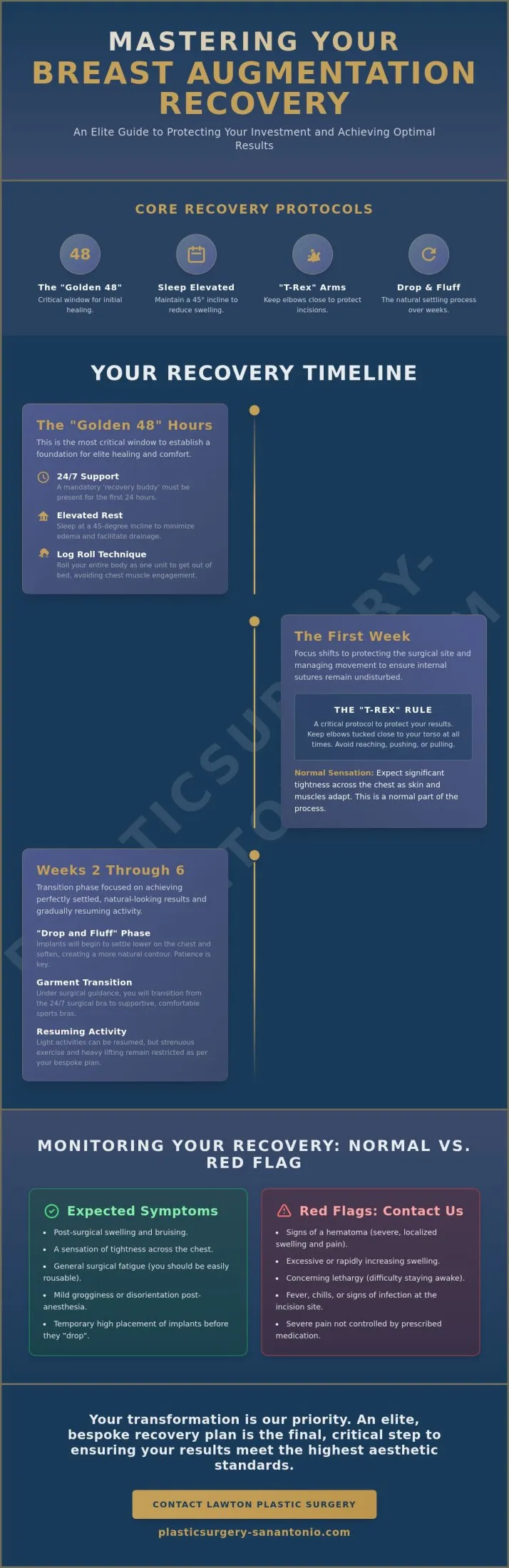
The initial forty-eight hours following your surgery, often termed the ‘Golden 48,’ represent the most critical window for establishing a trajectory toward an elite aesthetic outcome. During this time, the body initiates the primary inflammatory response and begins the delicate process of tissue integration around the new implants. Mastering the nuances of post op care for breast implants during this phase ensures that your comfort is maximized while the architectural integrity of the surgical site is preserved. Precision at this stage prevents unnecessary strain on the internal sutures and minimizes the risk of early-stage complications as you begin your Breast augmentation procedure recovery journey.
To better understand this concept, watch this helpful video:
Managing the immediate post-anesthesia window requires a methodical approach to both safety and comfort. It’s common to experience a sense of grogginess or mild disorientation as the effects of the anesthetic agents dissipate. Your clinical pain management protocol will typically begin with prescribed analgesics to maintain a consistent baseline of comfort, eventually transitioning to high-quality over-the-counter options as directed by your surgical team. Hydration is equally paramount. Focusing on electrolyte-rich fluids and anti-inflammatory nutrition, such as lean proteins and antioxidant-heavy fruits, supports cellular repair without exacerbating swelling or digestive sluggishness.
Immediate Post-Surgical Logistics at Home
Your home environment should be transformed into a recovery sanctuary before you arrive. This includes a dedicated sleeping area where you can remain at a 45-degree incline, which is essential for reducing edema and facilitating proper drainage. A ‘recovery buddy’ is a mandatory requirement for the first twenty-four hours to assist with mobility, meal preparation, and medication timing. Additionally, your surgical bra must remain in place around the clock; this constant compression is non-negotiable for stabilizing the implants and supporting the newly contoured tissues during these early, vulnerable hours.
Monitoring Vital Signs and Initial Comfort
It’s vital to differentiate between expected surgical fatigue and concerning lethargy. While you’ll feel tired, you should remain easily rousable and able to engage in light conversation. If you experience mild nausea post-anesthesia, focus on small, frequent sips of water or ginger tea rather than large meals. To protect the integrity of the implant pocket, utilize the ‘log roll’ technique when exiting your bed. This involves rolling your entire body as a single unit to the side before using your legs to pivot, ensuring you don’t engage the chest muscles to push yourself upright, which could compromise the internal repair.
Navigating the First Week: Incision Care and Movement Restrictions
As you transition beyond the initial 48 hours, the focus of your recovery shifts toward protecting the structural integrity of the surgical site. The first week is a period of significant biological activity where the body begins to secure the implants within their newly created pockets. Adhering to professional post-operative recovery guidelines is essential during this time to ensure that the delicate internal sutures remain undisturbed. Effective post op care for breast implants during this window requires a disciplined approach to movement and a meticulous eye for wound hygiene. You’ll likely notice a sensation of significant tightness across the chest as the skin and underlying musculature expand to accommodate the new volume; this is a normal physiological response to the augmentation.
One of the most effective protocols for protecting your results is the “T-Rex” rule. This guideline requires you to keep your elbows tucked close to your torso, avoiding any reaching, pulling, or lifting movements that engage the pectoralis major. When you lift your arms above shoulder height, you risk putting undue tension on the fresh incisions and potentially displacing the implants before they’ve had a chance to settle. Maintaining this restricted range of motion is a hallmark of elite recovery, ensuring the surgical artistry remains exactly as intended. For patients in San Antonio, the local climate adds another layer of complexity. The high Texas humidity can create a moist environment under the surgical bra, so it’s vital to keep the incision area clean and dry to prevent skin maceration or bacterial growth.
Advanced Wound Care Protocols
The technical integrity of your incision closure is the foundation of a minimal scar. Most patients can safely shower after 48 hours, but you must avoid direct water pressure on the chest and gently pat the area dry with a fresh, sterile towel. It’s important to differentiate between the standard pinkness of healing and the spreading redness or localized heat that might signal an early-stage infection. We often utilize specialized surgical tape or medical-grade silicone sheets to provide a protective barrier and optimize the long-term aesthetic of the scar. As you progress through these daily protocols, the expert guidance available at Lawton Plastic Surgery provides the clinical reassurance necessary for a seamless transition.
Restricted Movements and Daily Ergonomics
Physical discipline is paramount during the first seven days. Lifting anything heavier than five pounds, including small pets or grocery bags, can compromise internal sutures and lead to increased swelling. You’ll need to make ergonomic adjustments for daily tasks; for instance, having someone else wash your hair at a sink can prevent the strain of reaching overhead in the shower. Driving is strictly prohibited until you’ve finished all prescription pain medications and regained the full range of motion necessary for emergency maneuvers. These restrictions aren’t merely suggestions but are critical components of a high-performance recovery plan designed for superior results.
Weeks Two Through Six: Managing the ‘Drop and Fluff’ and Resuming Activity
“Caring for your new breasts is a marathon rather than a sprint — this will help you maintain a calm, confident perspective as your results continue to improve day by day.”
The window between the second and sixth week represents a sophisticated transition where surgical recovery evolves into aesthetic refinement. During this phase, the acute swelling of the first few days dissipates, allowing the true artistry of the procedure to emerge. Mastering your post op care for breast implants during this period requires patience as your body undergoes the “drop and fluff” process. This is a vital physiological stage where the pectoralis muscle, if involved, begins to relax and the breast tissue softens, allowing the implants to settle into their final, anatomical position. While the initial results are visible immediately, the refined, natural-looking contour you desire typically solidifies during these weeks as the internal tissues integrate with the new volume.
Transitioning from the initial medical compression garment to a high-impact, wire-free sports bra is a significant milestone in your journey. This change supports the settling process while providing the necessary stability for your daily routine. It’s also a time for psychological recalibration. Many patients experience a temporary shift in body image or “post-op blues” as the initial excitement of surgery meets the reality of the settling process. Understanding that Caring for your new breasts is a marathon rather than a sprint will help you maintain a calm, confident perspective as your results continue to improve day by day.
The Anatomical Journey of Your Implants
In the early weeks, it’s perfectly normal for implants to appear “high and tight” on the chest wall. Gravity and the natural relaxation of the skin and muscle will gradually guide them downward into the breast fold. You might notice that one side settles faster than the other, creating temporary asymmetry. This is a common occurrence in post op care for breast implants and usually resolves as the inflammatory response concludes. Your three-week follow-up appointment with Dr. Lawton is a critical touchpoint to ensure this settling is progressing according to our high clinical standards and to adjust your individualized recovery plan if necessary.
Resuming a High-Performance Lifestyle
Returning to your active lifestyle in San Antonio requires a methodical “Lower Body First” approach. By week three, most patients can resume brisk walking and light lower-body exercises that don’t involve bouncing or chest engagement. This allows you to maintain your fitness without compromising the internal repair. In professional settings, you’ll likely find that you can return to desk-based work with full discretion, as the settling implants begin to move more naturally with your body. Finally, you may begin transitioning from sleeping strictly on your back to a side-sleeping position, provided you use supportive pillows to prevent any direct pressure on the surgical site during the night.
Preventing Complications: When to Contact Lawton Plastic Surgery
While the vast majority of patients experience a seamless transition to their new silhouette, maintaining a high level of clinical vigilance is a fundamental component of elite post op care for breast implants. It’s essential to distinguish between the standard physiological responses to surgery and the subtle indicators of a clinical anomaly. While modern surgical techniques have significantly reduced risks, such as the 0.5% capsular contracture rate observed in recent clinical trials for advanced silicone devices, your commitment to monitoring your recovery ensures that the technical finesse of your procedure remains protected. A sophisticated understanding of these ‘red flag’ symptoms allows for immediate intervention, preserving both your health and your aesthetic investment.
One of the primary concerns during the early weeks is the accumulation of fluid, known as a hematoma or seroma. A hematoma involves a collection of blood, while a seroma is the accumulation of sterile fluid; both require professional assessment to ensure they don’t compromise the implant pocket. Similarly, while the ‘drop and fluff’ process involves natural movement, a sudden or dramatic shift where an implant appears to move significantly out of its intended pocket could indicate displacement. Vigilance regarding these anatomical shifts is what separates a standard recovery from an elite, high-performance journey toward transformation.
Clinical Red Flags to Monitor
While bilateral swelling is expected, a sudden, significant increase in volume on only one side may indicate a hematoma or localized fluid collection that requires immediate clinical review.
The presence of a persistent fever, systemic chills, or localized heat and spreading redness around the incision site are indicators of a potential infection that must be addressed with pharmaceutical precision.
Although rare, symptoms such as shortness of breath or localized pain and swelling in the calf could signal systemic issues like a blood clot, necessitating urgent medical evaluation.
Aesthetic Safeguards
Beyond acute medical concerns, your post op care for breast implants should also focus on long-term aesthetic stability. ‘Bottoming out’ occurs when the implant slips below the natural breast fold, while symmastia, often colloquially termed the ‘uni-boob’ look, involves the implants moving too close to the midline. These concerns are often related to the technical integrity of the tissue pocket and require the expert eye of a board-certified professional to evaluate. Our ‘Lawton Open-Door Policy’ ensures that no concern is considered too minor; we prioritize your peace of mind as much as your physical healing. If you notice any deviation from your expected recovery path, contact Lawton Plastic Surgery immediately to speak with our clinical team.
Optimizing Your Aesthetic Outcome: The Role of Elite Post-Operative Support
Expertise in plastic surgery is often measured by the precision of the initial incision, yet the true mark of a board-certified professional is the level of support provided during the long-term healing phase. At our San Antonio facility, we view post op care for breast implants as a bespoke journey rather than a standardized checklist. This meticulous approach ensures that the sophisticated results achieved in the operating room are preserved and optimized as the tissues settle over the course of the first year. The transformation window from six months to one year is when the final, soft, and natural contour truly stabilizes, marking the successful conclusion of your surgical investment and the beginning of your new aesthetic reality.
The Lawton philosophy is rooted in the belief that individualized recovery plans are essential for achieving high-quality, subtle outcomes. We don’t subscribe to a one-size-fits-all methodology; instead, we monitor your progress with clinical precision to ensure that your specific anatomical needs are met at every milestone. Whether we are managing the initial inflammatory response or guiding you through the final stages of tissue softening, our goal is to provide a sense of calm confidence and absolute trust. This extended window of care is what allows our patients to return to their high-performance lifestyles with the assurance that their results are both safe and beautiful.
The Lawton Plastic Surgery Recovery Experience
Every patient at our practice benefits from the dedicated oversight of Dr. Lawton’s specialized post-operative nursing team, which provides a layer of clinical security and personalized attention that is rare in the industry. We recognize that recovery protocols must be tailored to the specific surgical technique employed. For instance, submuscular placements often require a more gradual reintroduction of upper-body activity due to the initial muscle tension, whereas subglandular recoveries may focus more on early skin support and pocket stabilization. By utilizing our private facility’s elite care standards, you can navigate these technical nuances with the absolute privacy and professional guidance that your transformation deserves.
Your Future with Breast Implants
Maintaining the longevity of your results involves a proactive commitment to skin health and regular clinical monitoring long after the initial post op care for breast implants is complete. Utilizing medical-grade topical treatments can help maintain skin elasticity and incision quality, ensuring the breast tissue remains as resilient as possible. Additionally, we guide our patients through the nuances of future diagnostic imaging; it’s vital that mammography is performed by technicians experienced in displacement techniques for implant patients to ensure accurate results. Following the FDA’s current recommendations, we advise regular screening for silicone integrity beginning at year five or six post-surgery.
To ensure your results remain as refined and healthy as the day they were achieved, we invite you to take the next step.
Securing Your Aesthetic Legacy through Clinical Discipline
Achieving a superior aesthetic result requires a seamless transition from the operating room to a disciplined, clinician-led recovery. By adhering to the ‘Golden 48’ protocols and respecting the anatomical settling process during the ‘drop and fluff’ phase, you ensure your surgical investment reaches its full potential. Mastering the nuances of post op care for breast implants isn’t merely about healing; it’s about protecting the technical finesse of your procedure through every stage of tissue integration. Your commitment to these elite standards, paired with professional oversight, guarantees a safe return to your high-performance lifestyle with results that are both natural and enduring.
Dr. Gary Lawton has been a cornerstone of the San Antonio medical community since 1999, offering a specialized focus on high-end aesthetic breast surgery. As a professional Board-Certified by the American Board of Plastic Surgery, he provides the clinical excellence and individualized attention necessary for a bespoke recovery journey. We don’t just prioritize the initial outcome; we focus on the long-term health and symmetry of your results.
Your path to a refined, sophisticated silhouette is a journey we are honored to guide with you.
Refine Your Results with Dr. Gary Lawton: Schedule Your San Antonio Consultation
Frequently Asked Questions
When can I stop wearing the surgical bra after breast augmentation?
You should expect to wear a surgical compression bra or an approved support garment for approximately four to six weeks following your procedure. This constant support is vital for stabilizing the implants and ensuring the surrounding tissues integrate correctly during the initial healing phase. Transitioning to a traditional bra occurs only after a clinical evaluation confirms that your implants have settled into their intended anatomical position.
How soon after surgery can I lift my children or pets?
You must avoid lifting any object heavier than eight pounds, including children and pets, for at least four to six weeks. Engaging the pectoralis major through heavy lifting can compromise the internal sutures and potentially displace the implants before the pockets have fully healed. Adhering to these restrictions is a fundamental part of post op care for breast implants, ensuring the technical integrity of your results remains undisturbed.
Is it normal for my breasts to feel numb or tingly after surgery?
Sensory changes, such as localized numbness, tingling, or hypersensitivity, are common physiological responses during the first several months of recovery. These sensations occur as the nerves in the breast tissue adjust to the new volume and the temporary stretching that occurs during surgery. Most patients find that normal sensation returns gradually as the inflammatory response concludes and the tissues fully integrate with the new devices.
When can I safely return to the gym for upper body workouts?
Upper body strength training and high-impact cardiovascular exercises are typically restricted for six to eight weeks following your augmentation. While light walking is encouraged early in the recovery process, strenuous chest movements can disrupt the delicate healing of the implant pocket. Your clinical team will provide a methodical timeline for resuming your high-performance fitness routine based on your specific surgical technique and healing progress.
How do I minimize scarring after my breast implant procedure?
Minimizing scar visibility requires a disciplined approach to wound care, including the use of medical-grade silicone sheets or specialized surgical tape once the incisions have closed. Protecting the surgical site from UV exposure for the first year is also critical, as sun damage can cause permanent hyperpigmentation of the scar tissue. These elite protocols are essential components of post op care for breast implants designed to achieve a subtle, sophisticated aesthetic.
Can I sleep on my side or stomach after breast augmentation?
You must remain strictly on your back in an elevated position for at least four weeks to prevent uneven pressure on the healing tissues. Sleeping on your side or stomach too early can lead to implant displacement or increased swelling, which may compromise the final symmetry of your results. Transitioning to a side-sleeping position requires clinical clearance and the use of supportive pillows to maintain proper anatomical alignment during the night.
What should I do if my implants look uneven during the first few weeks?
It’s important to remain patient, as asymmetrical settling is a standard occurrence during the initial “drop and fluff” phase of recovery. One breast often heals more rapidly than the other due to natural physiological differences or variations in dominant muscle usage. While this temporary asymmetry typically resolves as the implants settle into the breast fold, any sudden swelling or localized heat should be reported to your surgeon immediately.
When can I drive my car after getting breast implants?
Most patients can safely return to driving within one to two weeks, provided they are no longer taking prescription pain medications. You must also possess the full range of motion and physical strength necessary to perform emergency steering maneuvers without discomfort or restriction. This ensures that you can navigate the road safely while protecting the integrity of your surgical repair and the initial results of your transformation.
Disclaimer
Medical & Educational Disclaimer
All content presented on this website, including blog articles, written materials, images, videos, and any associated media, is provided strictly for informational and educational purposes. This content is not intended to serve as medical advice, diagnosis, or treatment, and should not be interpreted as a substitute for consultation with a qualified, licensed healthcare professional.
No doctor–patient relationship is established by your use of this website, engagement with its content, or communication through any digital platform, including contact forms, email, or social media. Medical care is highly individualized, and the information presented here may not apply to your specific condition, anatomy, or circumstances. You should always seek the guidance of a qualified physician regarding any medical concerns, treatments, or decisions.
While every effort is made to ensure accuracy and relevance, medical knowledge evolves rapidly, and no guarantee is made regarding the completeness, reliability, or current applicability of the information provided. The practice and its representatives expressly disclaim any liability for errors, omissions, or outcomes related to the use or misuse of this content.
Surgical & Aesthetic Outcomes Disclaimer
All surgical and non-surgical procedures carry inherent risks. Outcomes vary based on individual factors including anatomy, healing capacity, adherence to post-operative protocols, and overall health status. Any descriptions, discussions, or examples of outcomes presented on this website are illustrative only and should not be interpreted as guarantees of specific results. Before-and-after images, if presented, represent individual cases and do not reflect typical results.
Wellness, Nutrition & Supplementation Disclaimer
Content related to nutrition, supplementation, longevity, metabolic optimization, and integrative or holistic health strategies is provided for educational purposes only. These discussions may include emerging science, theoretical frameworks, or practitioner-based protocols that are not universally accepted within conventional medical standards. Supplements and wellness interventions may interact with medications or underlying health conditions. Consultation with a qualified healthcare provider is strongly recommended prior to initiating any new regimen.
Affiliate & Financial Disclosure
This website may contain links to third-party products, services, or platforms. Some of these links may be affiliate links, meaning a commission may be earned if a purchase is made through them. This comes at no additional cost to you. Product recommendations are based on professional judgment, clinical experience, and research; however, no guarantees are made regarding performance, efficacy, or outcomes. The practice assumes no responsibility for third-party products, services, or claims.
External Links Disclaimer
This website may reference or link to external websites for informational purposes. These sites are not controlled or operated by this practice, and no responsibility is assumed for the accuracy, content, privacy practices, or policies of any third-party website.
Limitation of Liability
By using this website, you acknowledge and agree that you assume full responsibility for any actions taken based on the information provided. Under no circumstances shall the practice, its physicians, affiliates, or representatives be liable for any direct, indirect, incidental, or consequential damages arising from the use of this content.
Consent
By accessing and using this website, you acknowledge that you have read, understood, and agree to this disclaimer in its entirety.