
What is a FUPA? A Clinical Guide to the Fatty Upper Pubic Area
What if the stubborn “pooch” you’ve been trying to flatten with crunches and rigorous diets is actually a distinct anatomical concern that exercise can’t address? Many discerning patients in San Antonio find themselves searching for clarity on what is a fupa, frustrated that their dedication to fitness hasn’t yielded a smooth, contoured pelvic profile. You deserve a sophisticated explanation that moves beyond colloquial terminology and into the realm of clinical anatomy. The reality is that the Fatty Upper Pubic Area is a unique structural challenge requiring a refined surgical approach to truly resolve.
You’ll find the clarity you need here. As a Yale-trained surgeon ranked in the top 2% nationwide, Gary P. Lawton, MD, FACS, offers the master clinician’s perspective on this specialized contouring concern. This guide moves past surface-level explanations to explore the science of the mons pubis, the limitations of conventional fitness regimens, and the precise surgical solutions available. We’ll discuss “The Lawton Experience” approach, ensuring you have the confidence to make an informed decision about your aesthetic journey within our private, AAAASF-certified surgery center.
Key Takeaways
- Understand the clinical definition of “FUPA” and how it differs anatomically from a panniculus or general abdominal fat.
- Discover the specific biological reasons why diet and exercise often fail to reduce the Fatty Upper Pubic Area.
- Explore the advanced surgical solutions, including monsplasty and liposuction, used to restore a sophisticated pelvic profile.
- Learn how “The Lawton Experience” integrates FUPA correction seamlessly into a comprehensive Mommy Makeover for harmonious results.
- Identify the elite credentials, such as board certification and Yale training, that ensure a safe and refined surgical outcome in San Antonio.
Defining the FUPA: Anatomical Meaning and Terminology
“In a professional surgical context, we view this not merely as a cosmetic nuisance but as a specific anatomical challenge involving the complex interaction of skin elasticity, subcutaneous fat, and underlying fascial structures.”
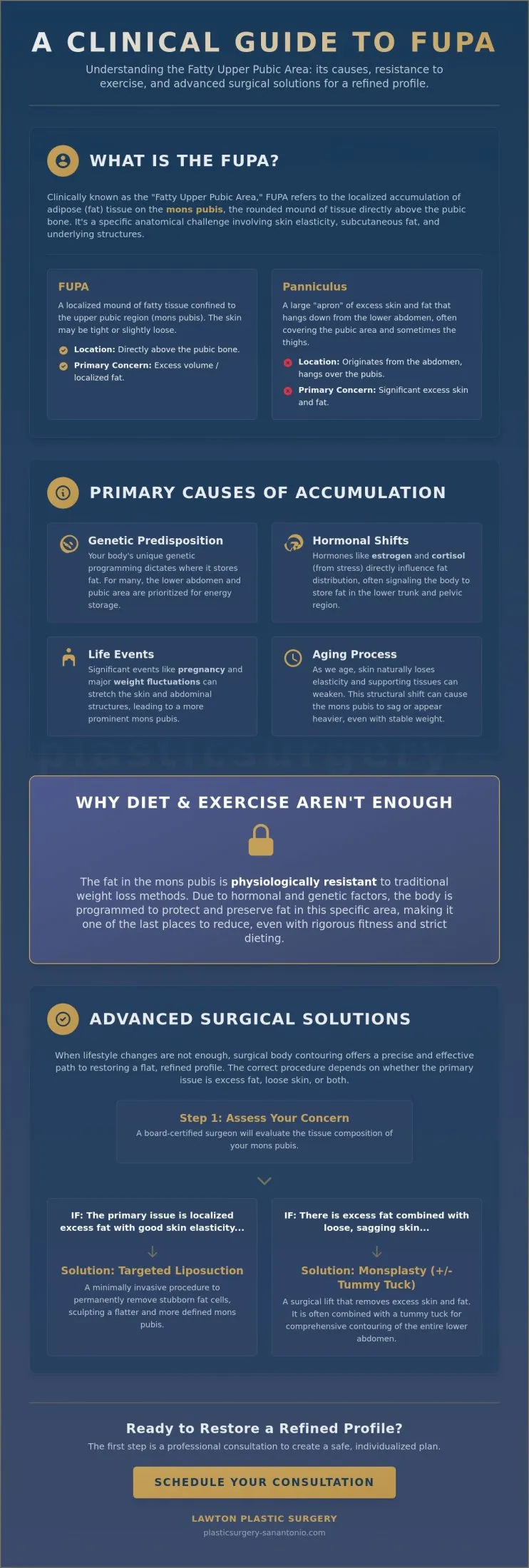
The term FUPA, while originating as a colloquialism, has gained significant clinical recognition as patients increasingly seek clarity on what is a fupa and how it impacts their aesthetic profile. The acronym stands for “Fatty Upper Pubic Area,” and it refers to the localized accumulation of adipose tissue in the region directly above the pubic bone. In a professional surgical context, we view this not merely as a cosmetic nuisance but as a specific anatomical challenge involving the complex interaction of skin elasticity, subcutaneous fat, and the underlying fascial structures.
To gain a visual understanding of how this tissue develops and why it persists, we invite you to view this clinical overview:
Central to this discussion is the mons pubis, which is the rounded mound of fatty tissue that covers the pubic symphysis. This structure serves a vital protective function for the pelvic bone, yet it can become a source of physical discomfort or self-consciousness when the volume of tissue exceeds a patient’s natural proportions. Distinguishing between a surplus of subcutaneous fat and the presence of redundant, loose skin is the primary step in formulating an effective treatment plan that ensures a balanced, natural result.
The Anatomy of the Mons Pubis
This region consists of a specialized cushion of fatty tissue situated over the pubic bone; it is supported by a network of skin and underlying fascia that maintains the contour of the lower pelvic area. The integrity of these tissues often changes due to weight fluctuations, aging, or hormonal shifts. The mons pubis is a natural anatomical feature that can become prominent due to specific life events such as pregnancy or significant weight loss.
FUPA vs. Panniculus: Understanding the Difference
Precision in diagnosis is paramount when planning a surgical intervention. Identifying the correct condition is vital for surgical planning because each requires a fundamentally different approach:
Localized adiposity within the upper pubic region.
Typical treatment: May only require liposuction when skin elasticity is intact.
A larger apron of excess skin and fat hanging down from the abdomen, often following massive weight loss.
Typical treatment: Necessitates more extensive tissue excision to achieve a refined profile.
Understanding these distinctions allows our team to tailor a surgical approach that addresses your specific anatomical needs with absolute precision.
The Primary Causes of Lower Abdominal and Pubic Fat Accumulation
Understanding the etiology of localized adiposity in the pelvic region requires a detailed look at biological predispositions. While many individuals research what is a fupa to address aesthetic frustrations, the clinical reality involves a sophisticated interplay of hormonal shifts, genetic programming, and structural changes. It’s rarely a matter of simple weight gain; rather, it’s often the result of how your body is uniquely designed to store energy and respond to life’s transitions.
Hormonal fluctuations play a decisive role in tissue distribution. Estrogen and cortisol are primary drivers of how fat cells are prioritized in the lower trunk. Chronic stress can elevate cortisol levels, which signals the body to protect the midsection by accumulating subcutaneous fat. According to the American Society of Plastic Surgeons, these biological factors are among the most common reasons patients seek professional contouring to restore their confidence.
Aging also contributes to the prominence of this area. As the skin loses its natural elasticity and the abdominal wall begins a gradual descent, tissue that was once firm can appear heavy or sagging. This structural shift can make the mons pubis more noticeable even if your weight remains stable. If you’ve noticed these changes, exploring a customized body contouring plan can help you understand the specific factors at play in your anatomy.
Pregnancy and Postpartum Changes
Gestation causes profound changes to the pelvic architecture. The skin and underlying musculature undergo significant stretching to accommodate a growing child, which often leads to permanent laxity. For those who have undergone a C-section, the resulting scar tissue can act as a restrictive band. This creates a “shelf” effect where fat and skin gather above the incision, making the pubic area appear disproportionately prominent compared to the rest of the abdomen. This postpartum tissue is frequently the most resistant to traditional exercise.
The Role of Genetics and Body Type
Your genetic blueprint largely dictates where your body stores “stubborn” fat. It’s common for lean individuals with a low body fat percentage to still possess a prominent mons pubis because their genetics prioritize fat storage in that specific region. Additionally, your pelvic bone structure influences how the overlying tissue is presented. A specific pelvic tilt can make the upper pubic area appear more projected, regardless of your fitness level. These pockets are often genetically programmed to resist systemic weight loss, necessitating a more targeted clinical approach.
Why Diet and Exercise Often Fail to Address the Mons Pubis
“Even the most disciplined cardiovascular routines cannot force the body to prioritize the mons pubis for energy consumption — spot reduction is a biological impossibility.”
Many patients who have achieved their ideal body weight still find themselves researching what is a fupa because their rigorous fitness efforts haven’t yielded a flat pelvic profile. This discrepancy exists because the fat found in the mons pubis is physiologically distinct from the visceral fat that surrounds internal organs. While visceral fat is highly metabolically active and typically the first to diminish during a caloric deficit, the subcutaneous adipose tissue in the pubic region is genetically programmed for persistence. It often remains unaffected even when a patient reaches a low overall body fat percentage; this leads to significant frustration for those dedicated to a healthy lifestyle.
The scientific reality is that spot reduction is a biological impossibility. Your body mobilizes energy from fat stores based on a systemic hormonal response rather than the proximity of the fat to a working muscle. Consequently, even the most disciplined cardiovascular routines cannot force the body to prioritize the mons pubis for energy consumption. For many, this area represents a “fat trap” where the density of alpha receptors, which inhibit fat breakdown, is higher than in other regions of the body. When lifestyle modifications reach their physiological limit, clinical intervention becomes the only viable path to meaningful contouring.
The Limitations of Targeted Crunches
A common misconception is that strengthening the lower abdominals will tighten the pubic area. In practice, building the underlying musculature through heavy resistance can sometimes exacerbate the issue. As the muscle fibers undergo hypertrophy, they may actually push the overlying fat layer further outward. There’s a fundamental difference between muscle tone and fat volume. While fitness improves health, it cannot reposition descended pubic tissue. Achieving a truly refined profile requires addressing the superficial layers that exercise simply cannot reach.
Skin Elasticity and Weight Loss
Weight loss often presents a secondary challenge: the loss of skin tension. When fat cells shrink, the skin that once housed them may lack the elastic recoil necessary to snap back to a tighter contour. This results in redundant, “deflated” tissue that hangs over the pubic bone, creating a profile that persists regardless of your body fat percentage. Identifying this threshold is essential for moving past the gym and toward a professional surgical solution.
- Redundant skin lacks the structural proteins to contract naturally after significant stretching.
- Localized plateaus indicate that the concern is structural rather than metabolic.
- Clinical assessment helps determine if the issue is residual fat or dermal laxity.
Our surgical approach focuses on these specific anatomical limitations, providing the precision that systemic weight loss cannot offer.
Surgical Solutions: From Monsplasty to Comprehensive Body Contouring
When lifestyle interventions reach their physiological limit, surgical intervention offers the only definitive path to correcting localized pelvic adiposity. Understanding what is a fupa from a surgical perspective allows us to distinguish between patients who require simple volume reduction and those who need structural tissue repositioning. Dr. Lawton approaches each consultation as both a scientist and an artist, meticulously evaluating the quality of the skin and the volume of underlying fat to design a bespoke surgical plan that prioritizes a balanced, sophisticated outcome.
Liposuction remains a highly effective modality for patients who possess good skin elasticity but struggle with persistent fat pockets in the mons pubis region. This technique involves the precise removal of fat cells through microscopic incisions, allowing for a more contoured and subtle profile. However, for many individuals, particularly those who have experienced significant weight fluctuations or childbirth, volume removal alone may leave behind redundant skin. In these instances, a more comprehensive approach is necessary to ensure the skin drapes smoothly over the newly refined pelvic architecture.
Precise fat removal through microscopic incisions for patients with good skin elasticity.
Specialized pubic lift removing a horizontal wedge of excess skin and fat to lift and tighten the region.
FUPA correction integrated with a Tummy Tuck for seamless transition from mid-abdomen to pelvic region.
Monsplasty: The Specialized Pubic Lift
A monsplasty, or pubic lift, is a specialized procedure specifically engineered to address the descent of the mons pubis tissue. During this surgery, Dr. Lawton removes a horizontal wedge of excess skin and fat, which effectively lifts and tightens the entire region. This technique is particularly beneficial for restoring a youthful position to the pelvic area. To ensure the most discreet result, scar placement is strategically located along the lower pelvic crease, where it is typically hidden by standard undergarments or swimwear.
Integrating FUPA Correction into a Mommy Makeover
For many women, the changes in the pubic area are inextricably linked to broader abdominal laxity. Addressing the mons pubis is a standard and essential component of a comprehensive Mommy Makeover. By creating a synergy between a Tummy Tuck and pubic contouring, we can achieve a seamless transition from the mid-abdomen to the pelvic region. This holistic approach ensures that the entire lower trunk is restored to a firm, athletic profile rather than leaving a disproportionate “shelf” of tissue at the pubic line.
If you’re ready to move beyond the limitations of “stubborn” fat and achieve a truly contoured profile, we invite you to schedule a private consultation with our elite surgical team.
Choosing a Board-Certified Surgeon in San Antonio for Pubic Contouring
Selecting a board-certified plastic surgeon is the most pivotal decision you’ll make on your journey to understanding what is a fupa and addressing it definitively. Gary P. Lawton, MD, FACS, brings the highest level of clinical authority to every consultation, leveraging his Yale-trained background and his status as a Fellow of the American College of Surgeons. This rigorous credentialing ensures that your procedure is managed by a Master Clinician who prioritizes surgical safety and refined aesthetic outcomes. The clinical excellence of our practice, performed in a private, AAAASF-certified surgery center, provides the foundation for the sophisticated and natural-looking results that define “The Lawton Experience.”
Beyond initial certifications, the depth of a surgeon’s experience profoundly impacts the final outcome. As a Top 2% Nationwide ranked plastic surgeon, Dr. Lawton applies decades of specialized expertise to body contouring procedures. This level of mastery is essential when navigating the intricate anatomy of the lower abdomen and pelvic region, ensuring that the procedure is tailored to your unique frame. We focus on delivering an undetectable result that complements your natural beauty rather than imposing a generic ideal.
The Lawton Patient Experience in San Antonio
Dr. Gary Lawton brings over 25 years of surgical expertise to the San Antonio community, establishing a reputation for clinical excellence and patient-centered warmth. Our practice is dedicated to serving patients from San Antonio, Boerne, and the surrounding Hill Country who seek an atmosphere of absolute trust and exclusivity. We understand that personal transformation is a deeply private endeavor, which is why our facility is designed to offer a protective and empathetic environment. By combining advanced methodology with a sophisticated eye for detail, we ensure that every patient receives a bespoke experience tailored to their individual needs.
Taking the Next Step Toward Confidence
Preparing for your body contouring consultation is an essential step in aligning your aesthetic goals with surgical reality. We encourage our patients to review our comprehensive before and after galleries to gain a clear sense of our philosophy regarding surgical sophistication and “undetectable” results. This visual preparation helps facilitate a more transparent and informative dialogue during your initial visit. When you’re ready to move past the frustration of stubborn tissue and reclaim your refined silhouette, our team is here to guide you through every stage of the process with calm confidence.
Restore Your Profile with Surgical Precision
Achieving a truly refined silhouette is a deeply personal investment that requires the meticulous care of an elite specialist. Understanding what is a fupa is the first step toward acknowledging that some anatomical concerns are simply beyond the reach of diet and exercise. By choosing a board-certified, Yale-trained plastic surgeon with a Top 2% Nationwide ranking, you’re investing in a comprehensive surgical philosophy that values clinical safety and natural-looking results above all else. The Lawton Experience offers a sophisticated path to surgical refinement, conducted within the private and secure environment of our AAAASF-certified surgery center.
Don’t let stubborn tissue undermine the confidence you’ve earned through your dedicated lifestyle choices. Whether your concern is best addressed through targeted liposuction, a specialized monsplasty, or a comprehensive Mommy Makeover, the right surgical plan is unique to your anatomy. We’re committed to providing the calm authority and surgical finesse necessary to guide you toward a refined and rejuvenated profile that reflects your true self. Take the definitive next step toward an aesthetic outcome that honors your individual beauty.
Frequently Asked Questions
Can I lose my FUPA through exercise alone?
Exercise alone is generally insufficient to eliminate the Fatty Upper Pubic Area due to the biological principle of spot reduction. The fat cells in this region are genetically resistant to systemic weight loss efforts. While maintaining a healthy lifestyle is essential, achieving a truly contoured pelvic profile typically requires a specialized clinical or surgical intervention to address the localized tissue.
Is a monsplasty performed under general anesthesia?
A monsplasty is typically performed under general anesthesia for the patient’s comfort and surgical precision. The procedure is conducted in our private, AAAASF-certified surgery center, which is renowned for its commitment to clinical safety. Performing the surgery in this environment ensures the highest standards of care and discreet recovery for our patients in San Antonio.
Will a tummy tuck automatically fix a FUPA?
A standard tummy tuck primarily addresses the mid and upper abdomen, but it doesn’t always correct the FUPA. To ensure a seamless silhouette, Dr. Lawton often integrates a specialized monsplasty or targeted liposuction with the abdominoplasty. This integrated approach is essential for creating a balanced transition between the abdomen and pelvic region.
What is the recovery time for a pubic lift or liposuction?
Recovery times vary based on the chosen technique; standalone liposuction typically allows for a return to light activity within a few days, while a monsplasty requires a more substantial period of rest, typically 1 to 2 weeks. Our Master Clinician approach involves detailed post-operative care protocols and personalized follow-ups to ensure your healing process is as comfortable and efficient as possible.
Are the results of FUPA surgery permanent?
The results of surgical FUPA correction are designed to be long-lasting, especially when paired with a stable, healthy lifestyle. Liposuction permanently removes the targeted fat cells from the area. However, significant weight fluctuations or future pregnancies can alter the surgical outcome, so maintaining your post-op weight is essential for preserving your refined results.
Will there be visible scarring after a monsplasty?
Dr. Lawton utilizes advanced, minimal-scar techniques during a monsplasty, strategically placing incisions along the lower pelvic crease. This expert placement ensures that the resulting scar is typically discreet and easily concealed by standard undergarments or a swimsuit. Our focus is always on delivering a sophisticated and aesthetically refined outcome.
Can I combine FUPA removal with other procedures?
Yes, combining FUPA removal with other procedures is a common and highly effective approach in body contouring. Many of our patients integrate this correction into a comprehensive Mommy Makeover, which includes a Tummy Tuck and Breast Augmentation. This synergy allows for a unified surgical session and a single recovery period, providing a complete aesthetic restoration.
Disclaimer
Medical & Educational Disclaimer
All content presented on this website, including blog articles, written materials, images, videos, and any associated media, is provided strictly for informational and educational purposes. This content is not intended to serve as medical advice, diagnosis, or treatment, and should not be interpreted as a substitute for consultation with a qualified, licensed healthcare professional.
No doctor–patient relationship is established by your use of this website, engagement with its content, or communication through any digital platform, including contact forms, email, or social media. Medical care is highly individualized, and the information presented here may not apply to your specific condition, anatomy, or circumstances. You should always seek the guidance of a qualified physician regarding any medical concerns, treatments, or decisions.
While every effort is made to ensure accuracy and relevance, medical knowledge evolves rapidly, and no guarantee is made regarding the completeness, reliability, or current applicability of the information provided. The practice and its representatives expressly disclaim any liability for errors, omissions, or outcomes related to the use or misuse of this content.
Surgical & Aesthetic Outcomes Disclaimer
All surgical and non-surgical procedures carry inherent risks. Outcomes vary based on individual factors including anatomy, healing capacity, adherence to post-operative protocols, and overall health status. Any descriptions, discussions, or examples of outcomes presented on this website are illustrative only and should not be interpreted as guarantees of specific results. Before-and-after images, if presented, represent individual cases and do not reflect typical results.
Wellness, Nutrition & Supplementation Disclaimer
Content related to nutrition, supplementation, longevity, metabolic optimization, and integrative or holistic health strategies is provided for educational purposes only. These discussions may include emerging science, theoretical frameworks, or practitioner-based protocols that are not universally accepted within conventional medical standards. Supplements and wellness interventions may interact with medications or underlying health conditions. Consultation with a qualified healthcare provider is strongly recommended prior to initiating any new regimen.
Affiliate & Financial Disclosure
This website may contain links to third-party products, services, or platforms. Some of these links may be affiliate links, meaning a commission may be earned if a purchase is made through them. This comes at no additional cost to you. Product recommendations are based on professional judgment, clinical experience, and research; however, no guarantees are made regarding performance, efficacy, or outcomes. The practice assumes no responsibility for third-party products, services, or claims.
External Links Disclaimer
This website may reference or link to external websites for informational purposes. These sites are not controlled or operated by this practice, and no responsibility is assumed for the accuracy, content, privacy practices, or policies of any third-party website.
Limitation of Liability
By using this website, you acknowledge and agree that you assume full responsibility for any actions taken based on the information provided. Under no circumstances shall the practice, its physicians, affiliates, or representatives be liable for any direct, indirect, incidental, or consequential damages arising from the use of this content.
Consent
By accessing and using this website, you acknowledge that you have read, understood, and agree to this disclaimer in its entirety.